Last week, Jamal Madison, an undergraduate research assistant, gave a presentation on the article titled “The Effect of a Legal Prime on Clinician’s Assessment of Suicide Risk” by Noah Chase Berman, Alexandra Sullivan, Sabine Wilhelm, and Glenn Cohen (2016).
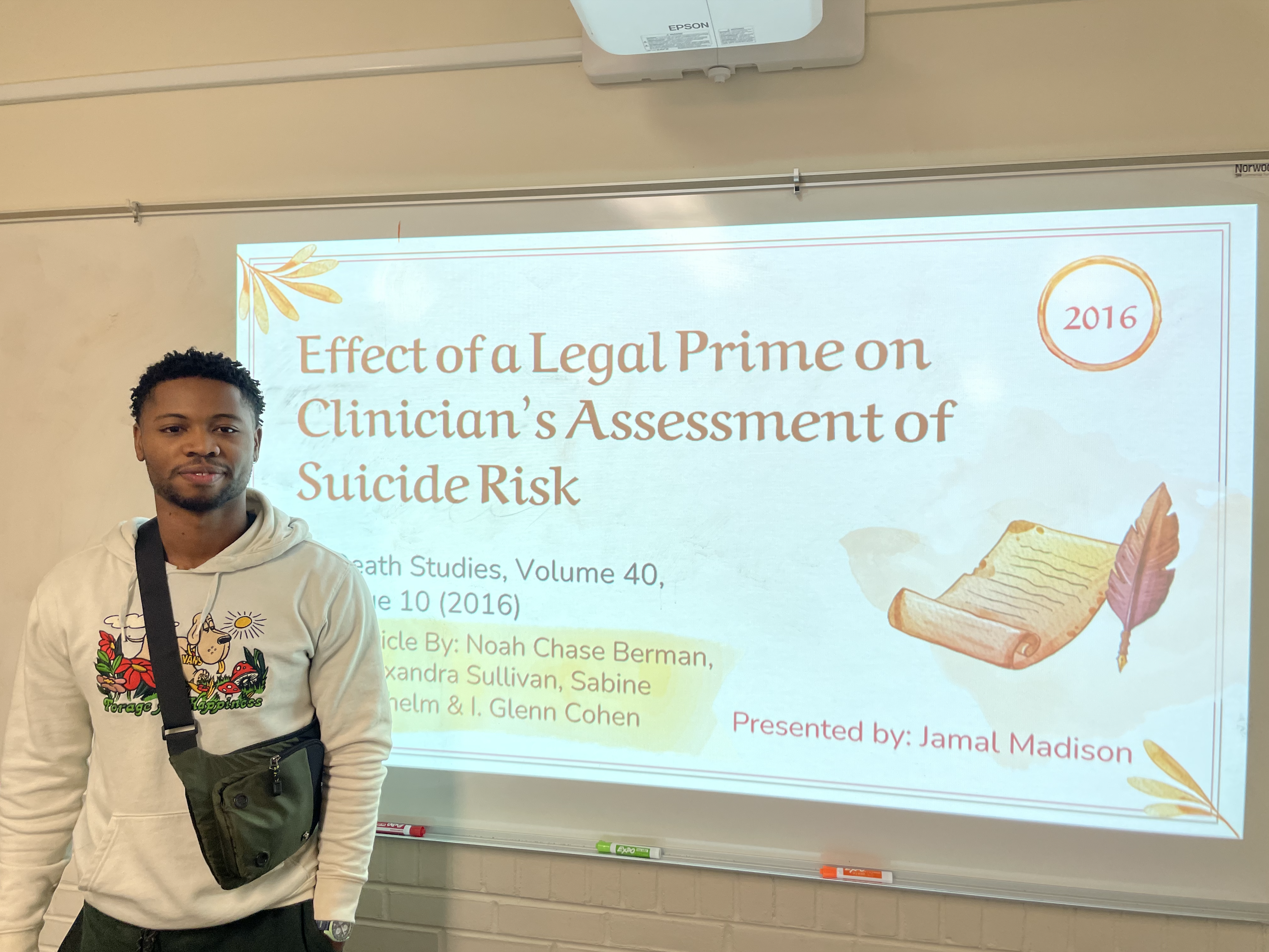
Jamal describes the idea of tort liability, which is the model that predicts that mental health professionals, or other clinicians, alter their behavior when liability risk changes. He also explains the idea of priming, the exposure to one stimulus that may influence a response to a subsequent stimulus, without conscious guidance or intention. The purpose of this study was to examine factors that influence decision making in clinical suicide assessment.
Three hundred and fifty participants were recruited via professional directories and graduate programs, and 258 were eligible for analysis (M = 33.53; SD = 8.41; range = 22–67). Participants reported their professional degree, whether training is complete, and whether they had ever hospitalized a patient for suicide.
All participants answered demographic questions, were presented with a vignette of a suicidal patient, and participants either received a legal prime or no legal prime. The legal prime and vignette are shown below. The participants then rated the patient’s likelihood to commit suicide in the next 24 hours, and recommend that the patient be hospitalized or not.
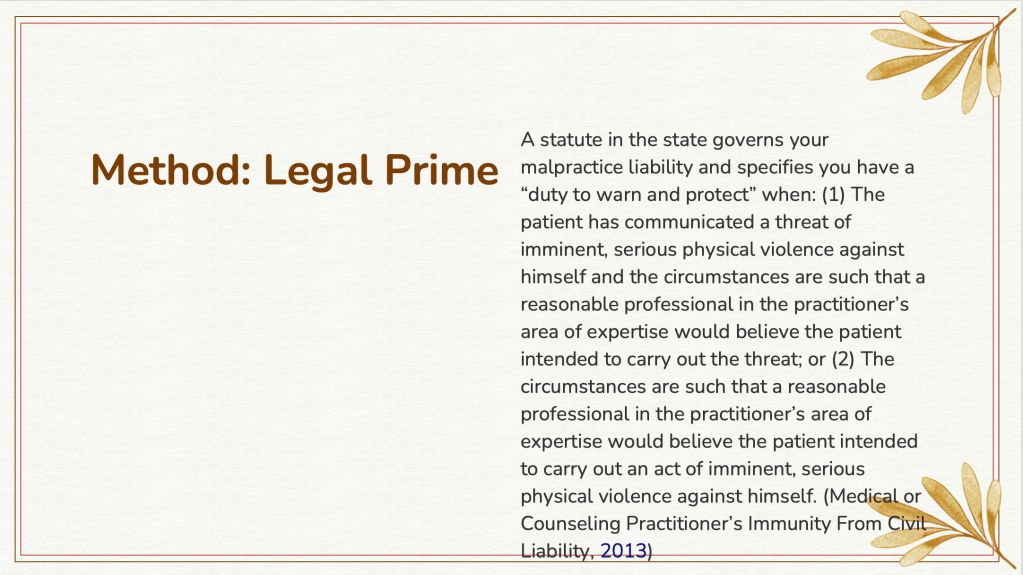

Those who were presented with the legal prime (M = 40.99, SD = 23.30) rated the patient’s suicide risk significantly lower than those who did not receive a legal prime (M = 47.65, SD = 20.69). While the gender of the patient in the vignette had no effect on the participants rating of suicide risk, it was found that clinician’s training level and demographics will moderate the effect of the legal prime.
Limitations of this study include possible self-selection bias as 20% of the participants did not complete outcome questions. Additionally there was no-text for the control group as the no legal prime group received no materials. Additionally, only one suicide measure was used putting the reliability in question.
Future directions of the study include anchors for suicide measure or understanding how the elements of the prime affect risk assessments. Jamal did an excellent job presenting this article, and we are excited to see him progress in his research endeavors!
 FF-TIP LAB