This past week, Wyatt Clark, a first semester undergraduate research assistant here at the FF-TIP Lab, gave an article presentation regarding people’s attitudes toward those with dementia and how personal experience may lead to changes in these attitudes. The article was entitled “Does Personal Experience of Dementia Change Attitudes? The Bristol and Gloucestershire Survey of Dementia Attitudes” by Richard Cheston, Jude Hancock, and Paul White (2018).

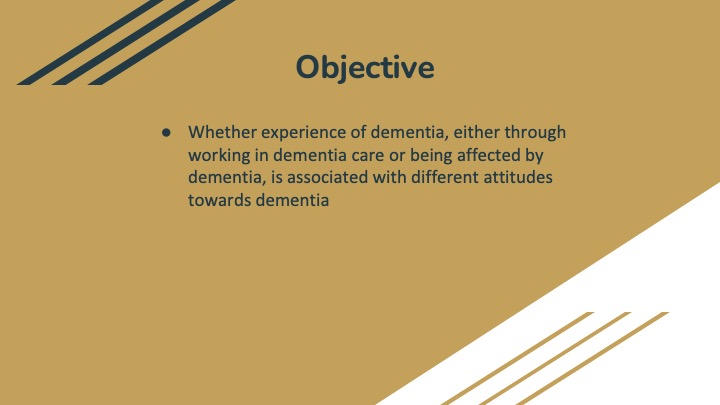
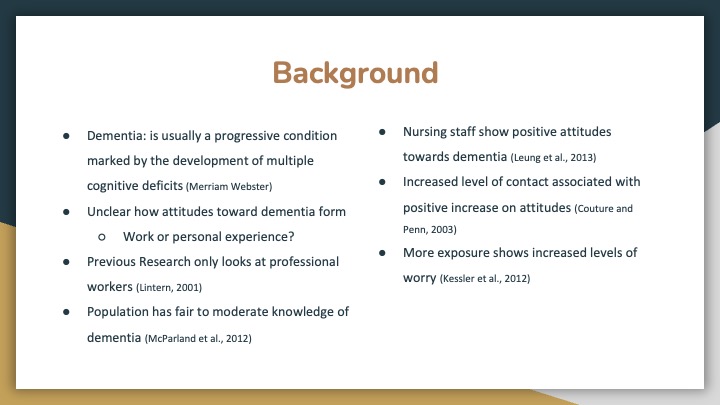
Wyatt started out by talking about the main objective of this study, which was to look at whether people’s personal experiences with individuals with dementia, either via working with dementia patients or being affected by dementia in another way, is associated with different attitudes toward dementia. He went on to provide background information regarding the study. He included a definition of dementia, which is a progressive condition marked by the development of multiple cognitive deficits. He also explained that previous research on this subject mainly focused on dementia through the lens of professional healthcare workers.
After providing us with a description of the ample background information that the authors of this article utilized to set up their study, Wyatt went on to describe the methodology of this research project.
The measures included the Approaches to Dementia Questionnaire (ADQ), a measure on hope (8 item scale indicating feelings of optimism or pessimism about the effects of dementia), and a recognition of personhood (RoP) scale (11 items reflecting the extent to which people have a person-centered understanding of dementia).

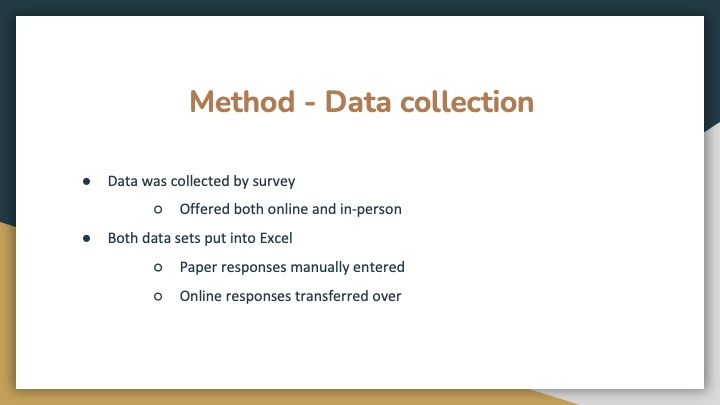


Wyatt then discussed the statistical analyses utilized in the study. He noted that Levene’s test indicated that the assumptions of homogeneity of variance were violated for the three one-way ANOVAs used to test this study’s hypotheses. Welch’s F was used to address this. The findings from this showed that there was a significant interaction between conditions when it came to RoP.
After discussing the results of this study, Wyatt pointed out some of the limitations of it. These included the fact that the survey pool consisted largely of social care professionals, meaning that it did not reach a very broad audience. Additionally, broad terms were used for those affected by dementia, making the descriptions in the survey a bit ambiguous. Wyatt noted that in the future, this research may lead to better treatment of dementia patients and reduced stigma around dementia.
This study was extremely interesting to learn about and we look forward to Wyatt’s future presentations!
 FF-TIP LAB