Recently, Avery Machuk, a senior at Oakland University and third semester research assistant here in the FF-TIP Lab, recently gave a presentation regarding the defense of her Honors College thesis on changes in social anxiety. In this study, she investigated social anxiety, what contributes to changes in social anxiety, and the gaps in research surrounding social anxiety.
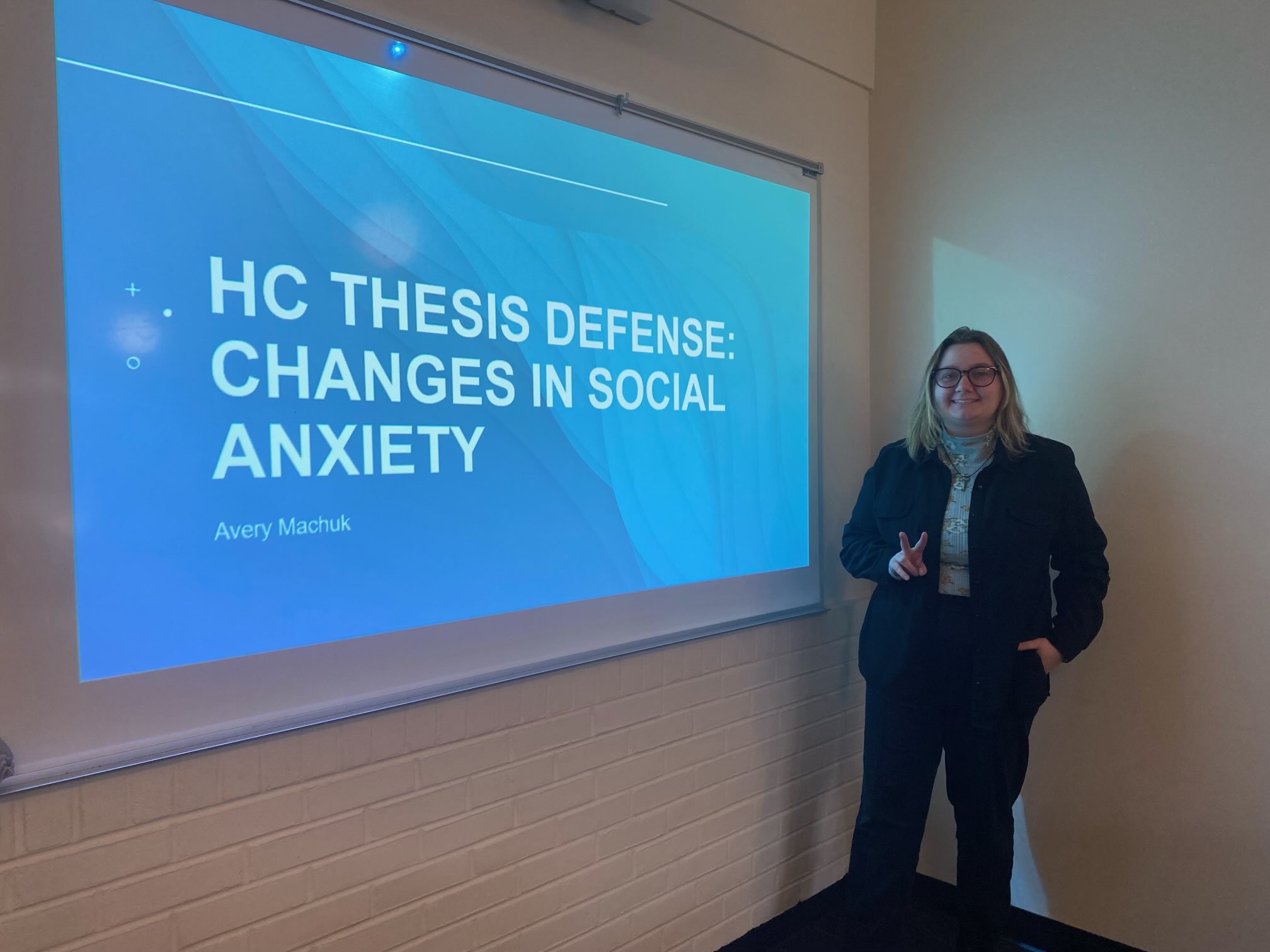
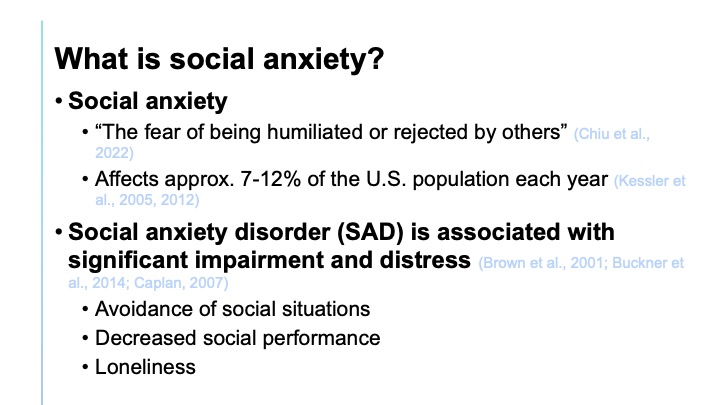
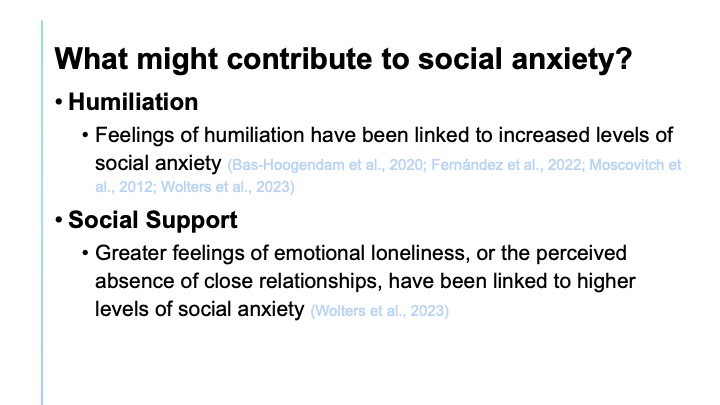
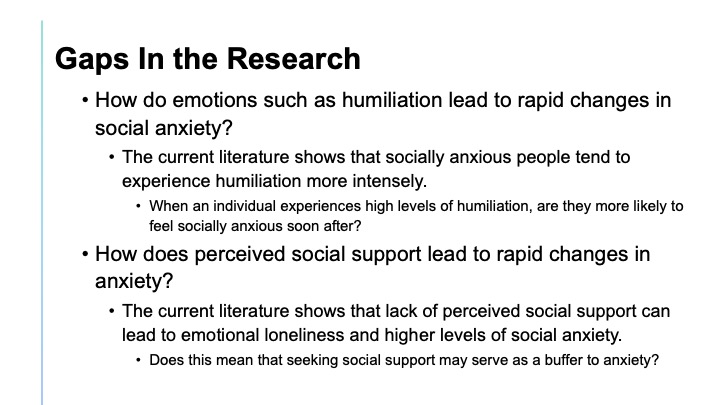
Avery started off her presentation by providing background information to what social anxiety is and what might contribute to it. She mentioned there was a link between intense feelings of humiliation and heightened social anxiety.She also explained that social anxiety has been linked to greater feelins of emotional loneliness. She then went on to describe gaps in the research, including the lack of literature regarding rapid changes in social anxiety and what might contribute to immediate increases or decreases in social anxiety levels.
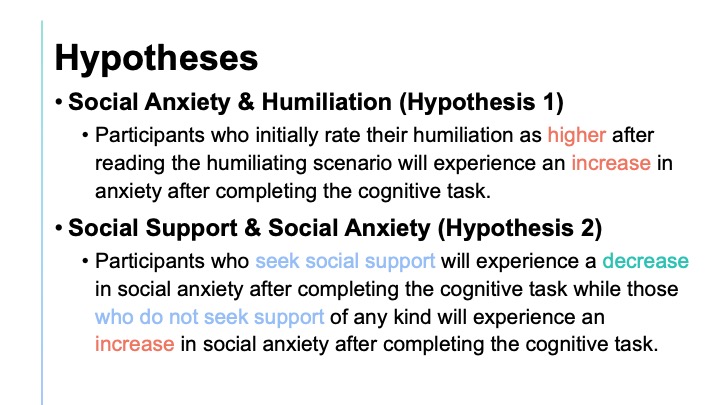
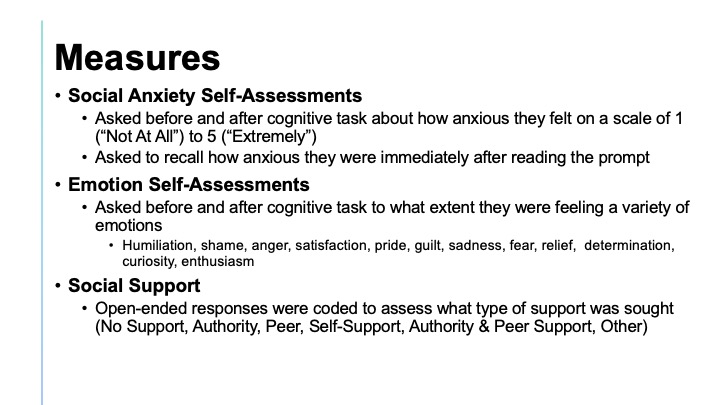
After laying the background information out, Avery went over the study’s hypotheses thoroughly. More specifically, she was interested in looking at how changes in social anxiety levels were influenced by factors such as anticipated social support and humiliation. She then went over how many people participated in her study, the procedure of the study, the vignette for the study, and the measures included in the survey. For instance, she explained that the current research was conducted using an online survey in which participants read a vignette to introduce humiliation. After reading the prompt, participants were instructed to imagine what would happen as a continuation of the vignette if they were the person described in the story. She explained that participants could relay what they imagined via open-ended responses which were coded for the purpose of this study’s analyses.
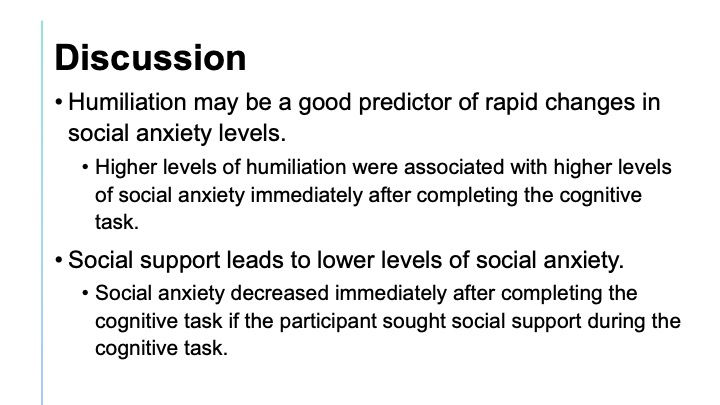
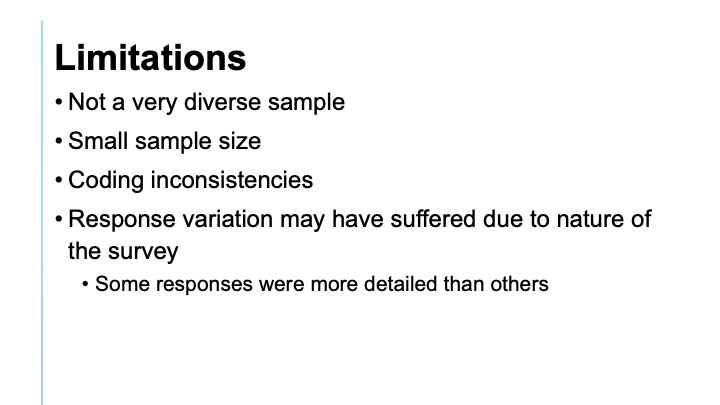
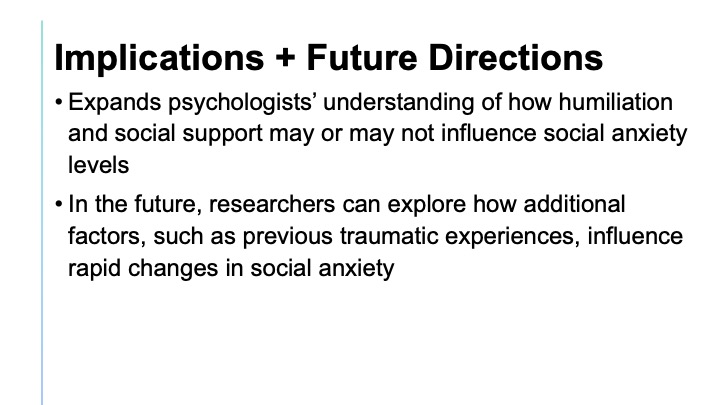
At the end of her presentation she went on to show the results of both her hypotheses and discussed her findings. She was able to show that both social support and humiliation predict rapid changes in social anxiety levels. She mentioned that the implications for these findings were plentiful, with the potential for results such as these to influence the creation of new coping strategies or interventions for socially anxious individuals. She also mentioned any limitations to her study, including coding inconsistencies and lack of response variation.
Avery also discussed future directions when it comes to research on social anxiety. For example, she mentioned that future researchers could look at different factors that might influence rapid changes in social anxiety, such as one’s previous traumatic experiences. She also mentioned that in the future, it might be interesting to look at how social support and humiliation might influence changes in depression levels.
Avery’s study is extraordinarily fascinating and we enjoyed seeing her thesis defense!
 FF-TIP LAB