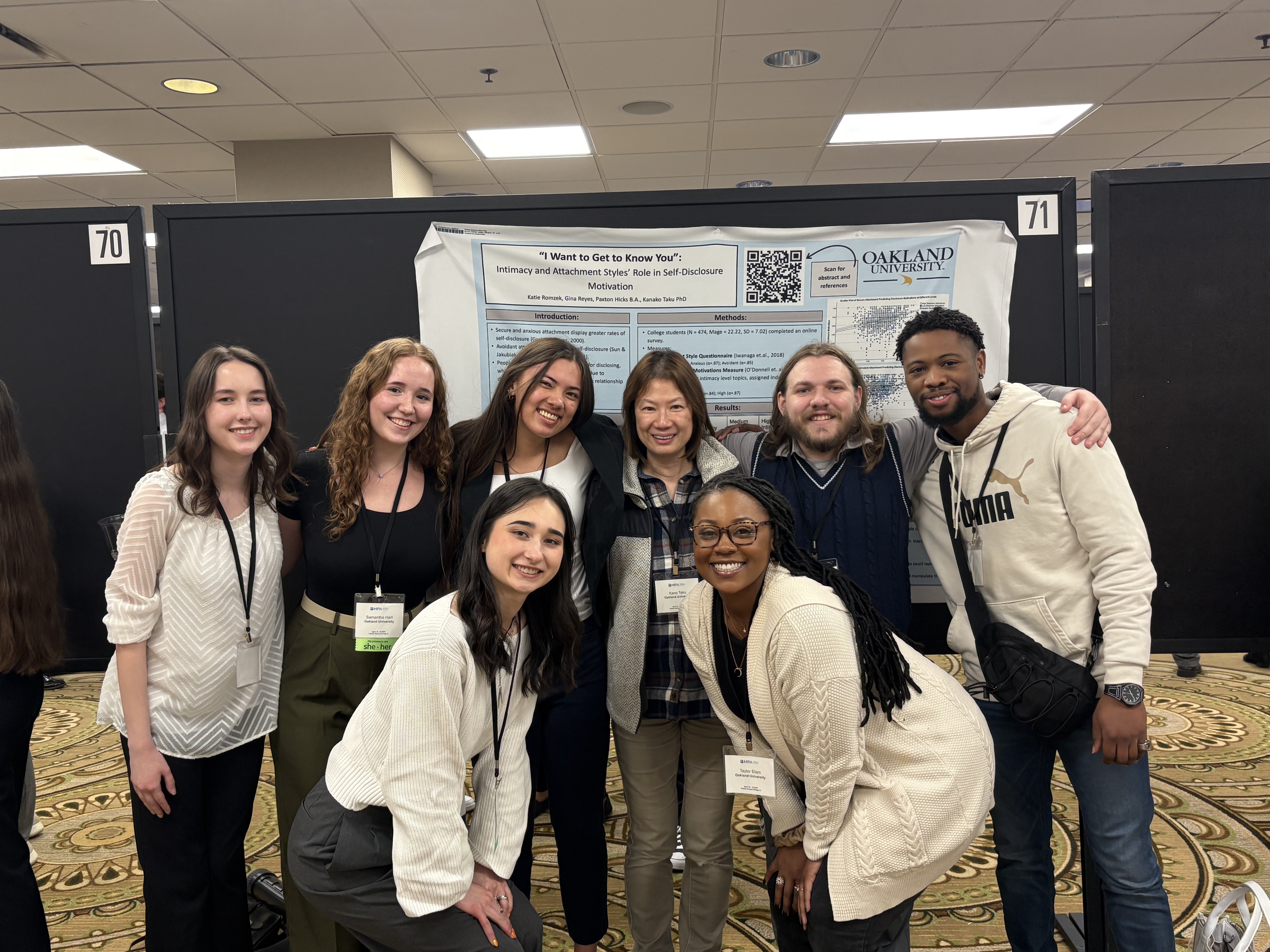
Last week, the FF-TIP Lab visited Chicago for the 96th annual Midwestern Psychological Association (MPA) Conference. This was a three-day conference at the Palmer House Hilton Hotel, filled with research-minded individuals presenting posters, paper talks, symposiums, and engaging in workshops focused on expanding on and informing psychological research.
We are proud to announce that every member of the FF-TIP Lab was able to present their own posters or talks at MPA! Here is a rundown of what each member did:
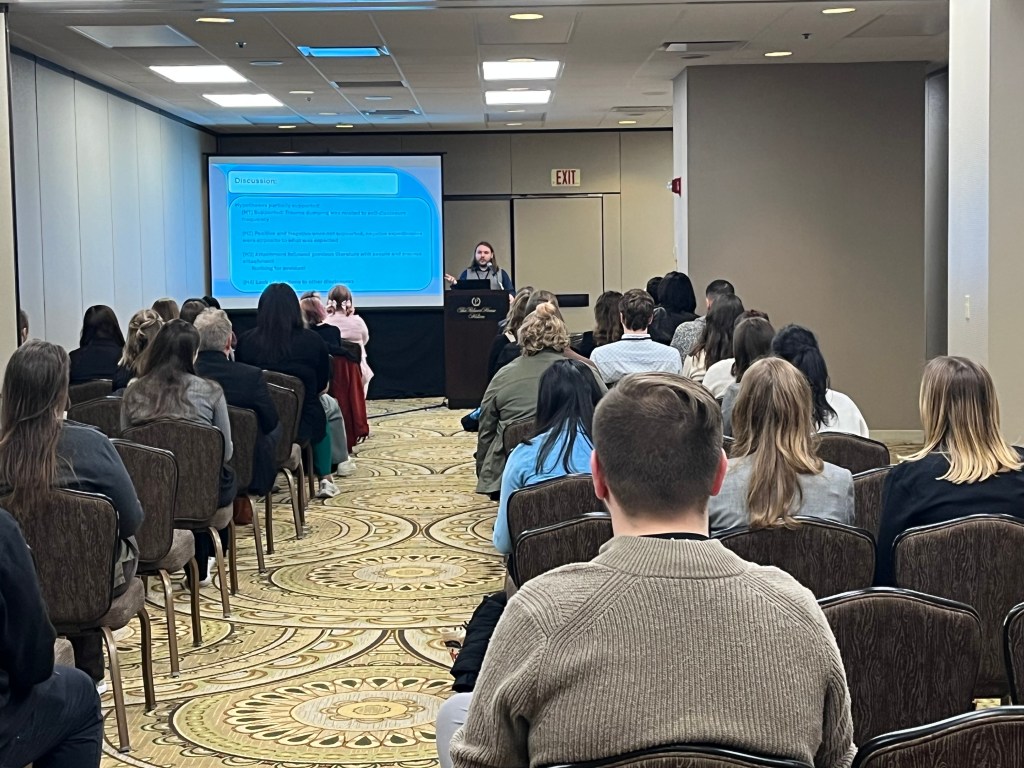
Paxton Hicks started our weekend with an excellent presentation titled “Thanks for Trauma Dumping”: Validation of the Trauma Dumping Scale. In the 15 minutes Paxton was given, he explored what trauma dumping is and introduced a reliable new measure of trauma dumping. Through his findings, Paxton was able to articulate how his scale positively correlated with frequent disclosure and anxious avoidant attachment.

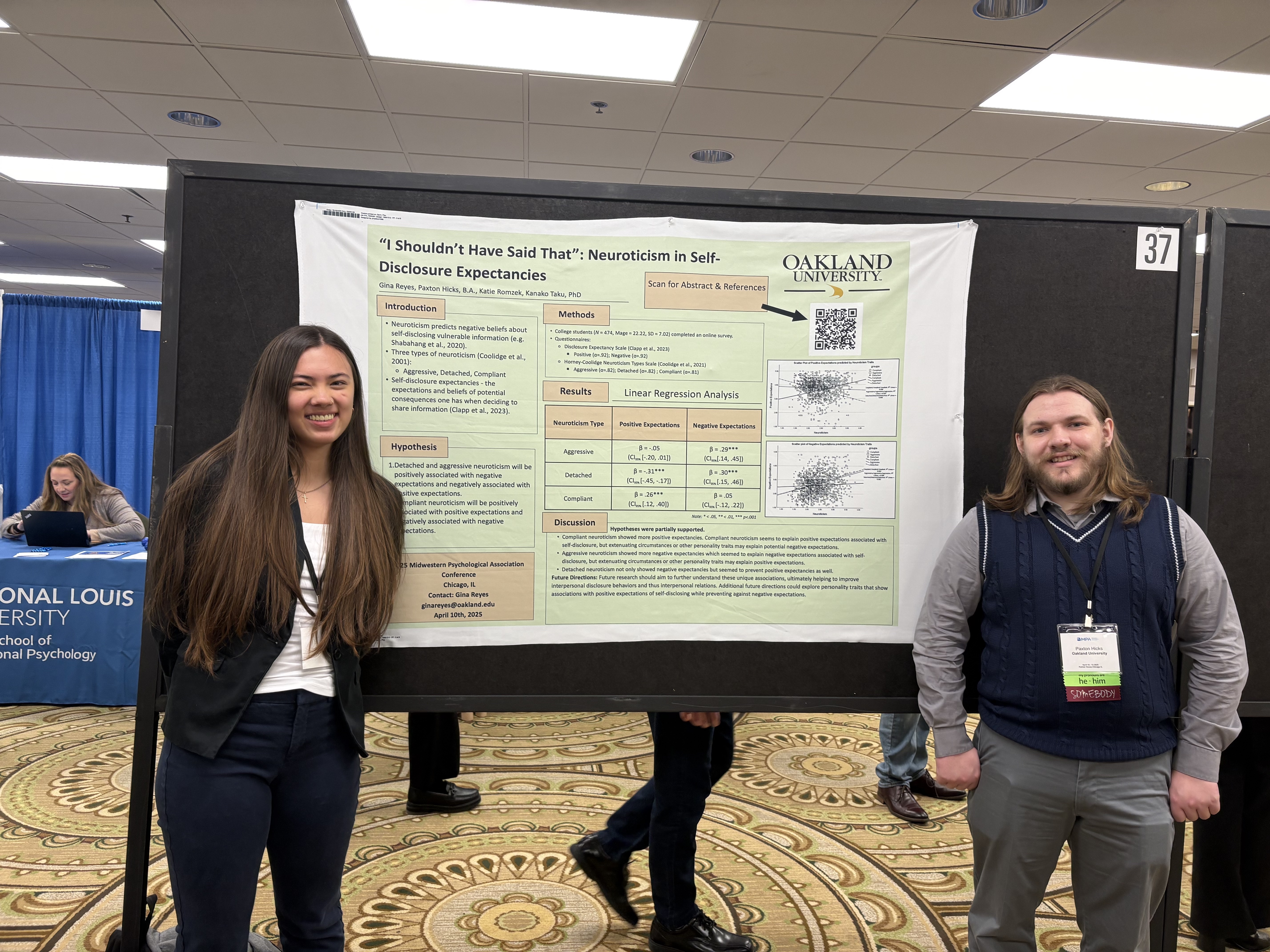
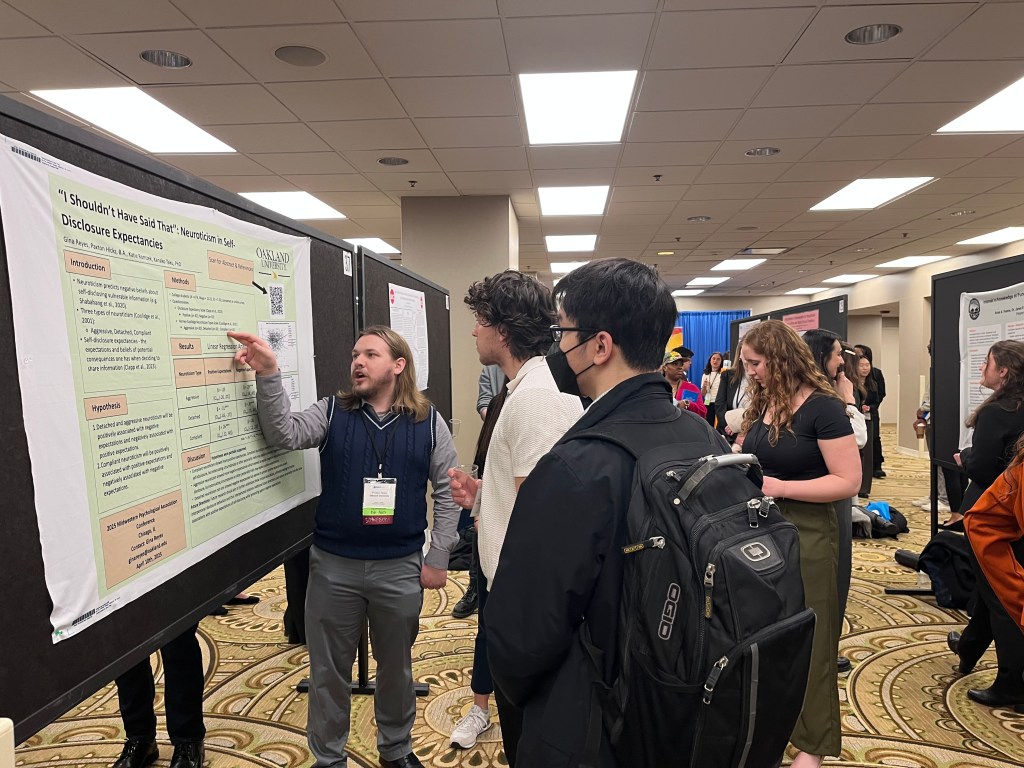
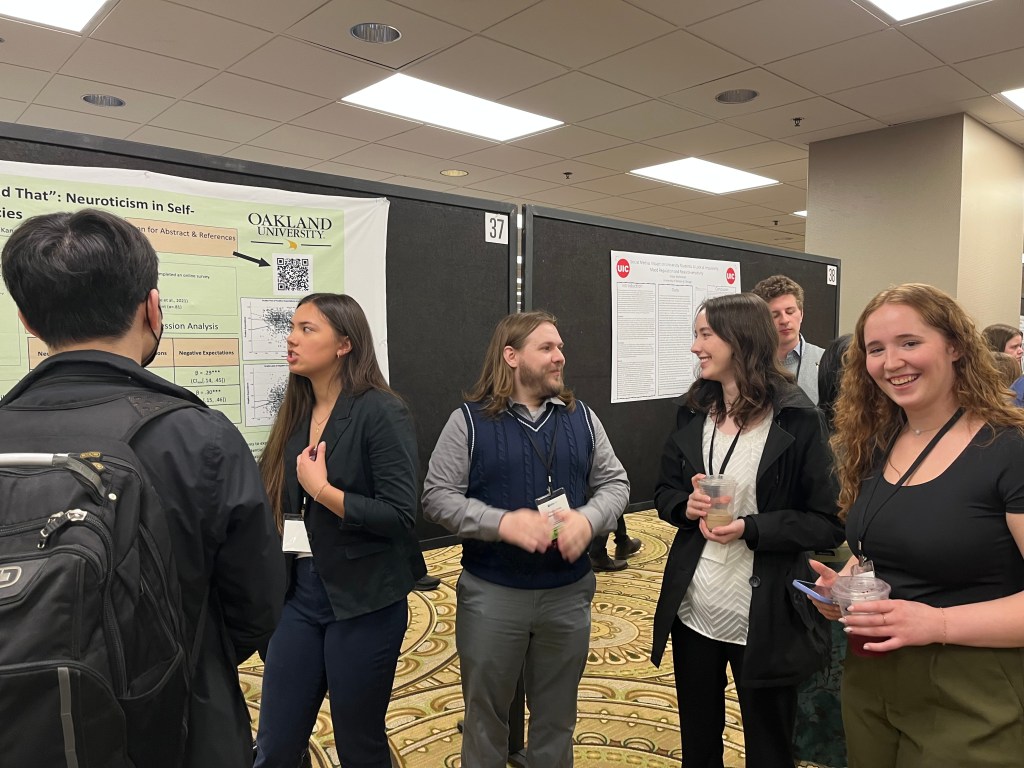
Gina Reyes, with co-authors Paxton Hicks and Katie Romzek, presented a poster titled “I Shouldn’t Have Said That”: Neuroticism and Self-Disclosure Expectancies. She found that compliant neuroticism predicted more positive disclosure expectations, while aggressive and detached neuroticism predicted more negative ones. Her findings suggest personality plays a key role in how people anticipate others’ reactions to self-disclosure.
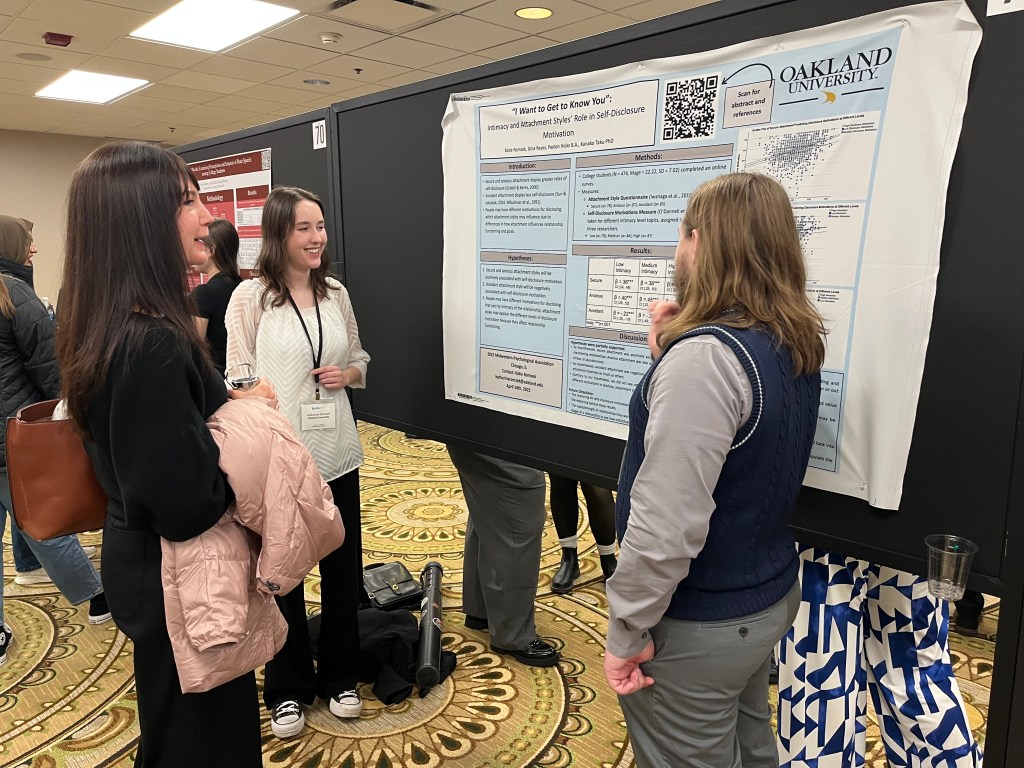
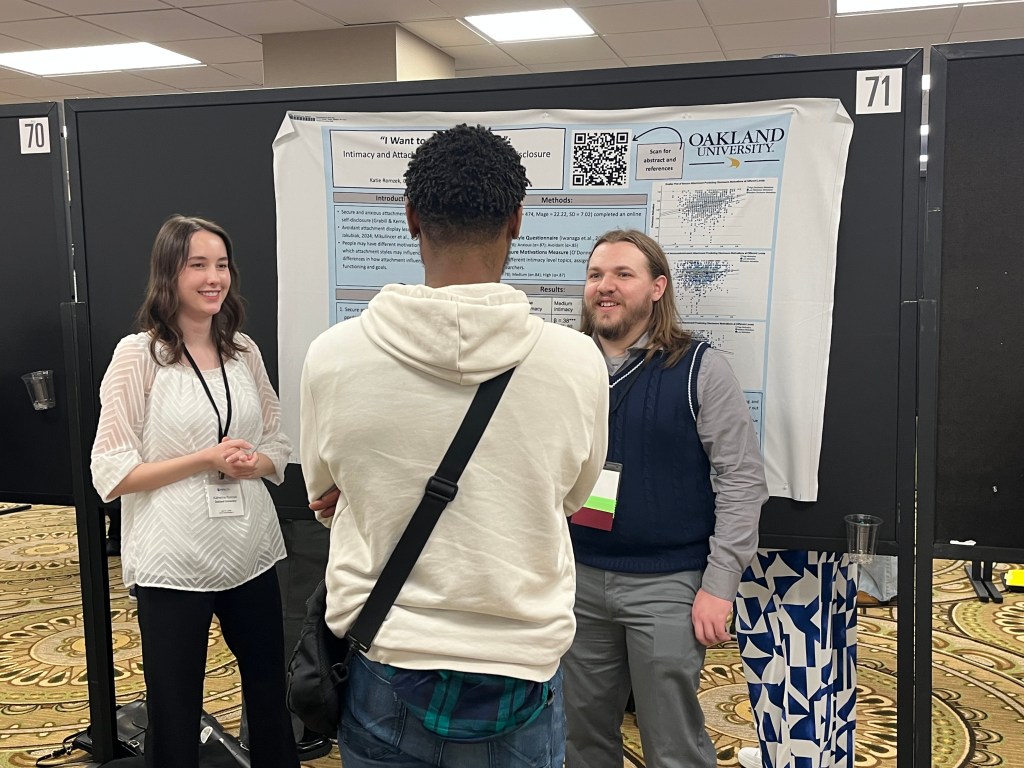
Katie Romzek, with co-authors Paxton Hicks and Gina Reyes, presented a poster titled “I Want to Get to Know You”: Intimacy and Attachment Styles’ Role in Self-Disclosure Motivation. She found that secure and anxious attachment styles were linked to higher motivation to self-disclose, while avoidant attachment predicted lower motivation. Her results suggest attachment influences whether people disclose, more than why they do.

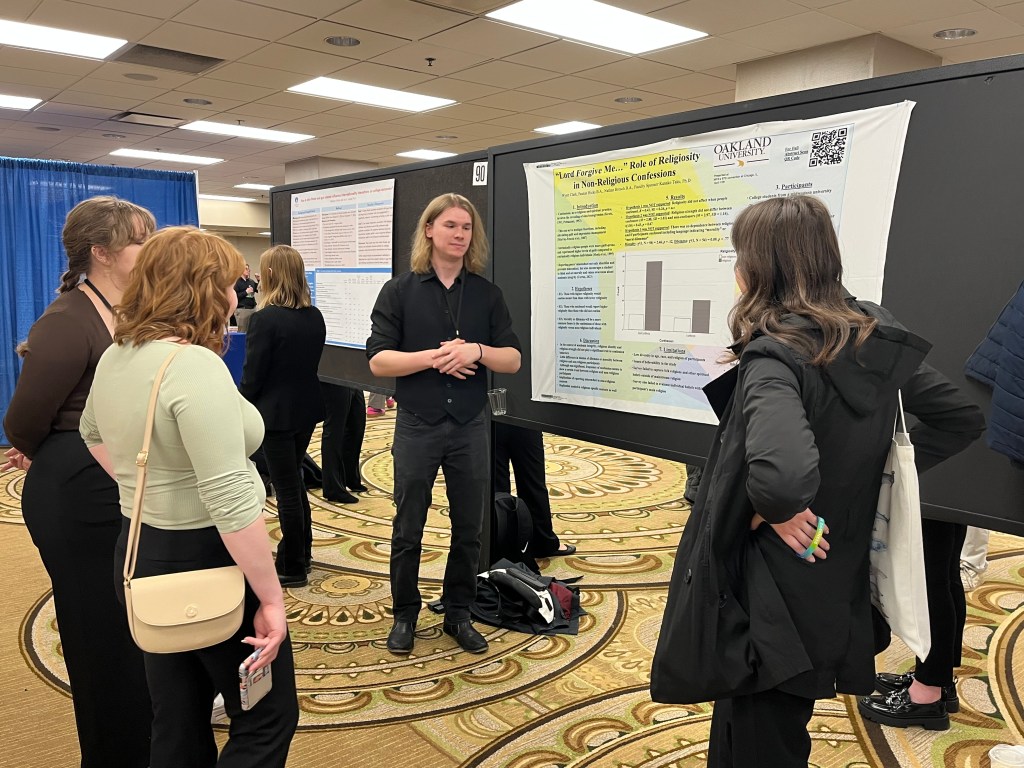
Wyatt Clark, with co-authors Paxton Hicks and Nathan Brosch, presented a poster titled “Lord Forgive Me…”: Role of Religiosity in Non-Religious Confessions. He explored whether religiosity influenced confession behavior but found no significant differences in timing, themes, or frequency of confessions based on religious strength. His findings suggest factors beyond religious identity may shape confessions.

Marina Morris, with co-authors Taylor Elam and Samantha Hart, presented a poster titled “Shifting Perceptions: How Empathy and Mindfulness Shape Moral Impressions”. She found partial support that empathy influences how people update moral judgments, especially in response to moral decline. Her results suggest empathetic individuals may be more sensitive to others’ moral behavior changes.

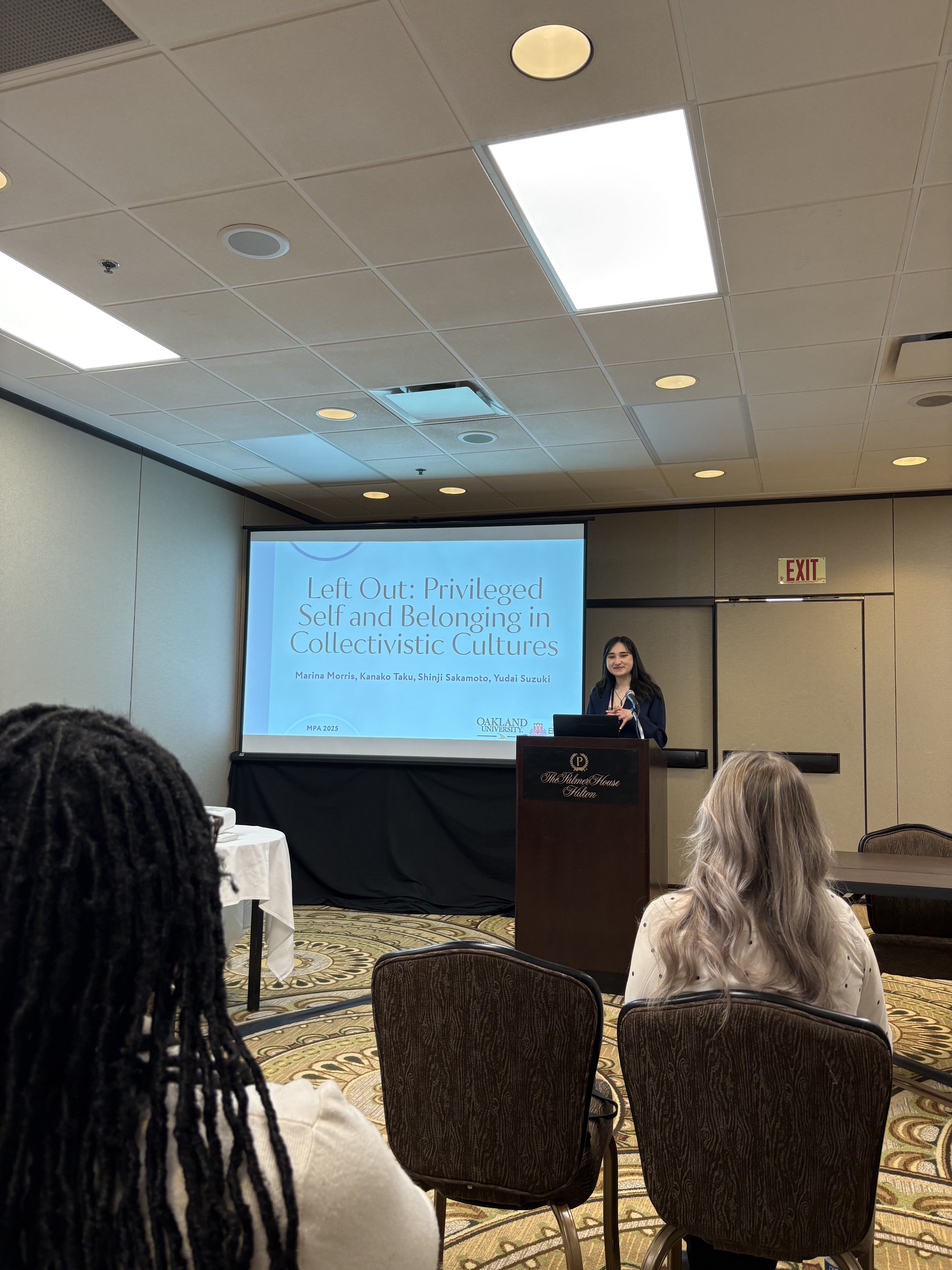
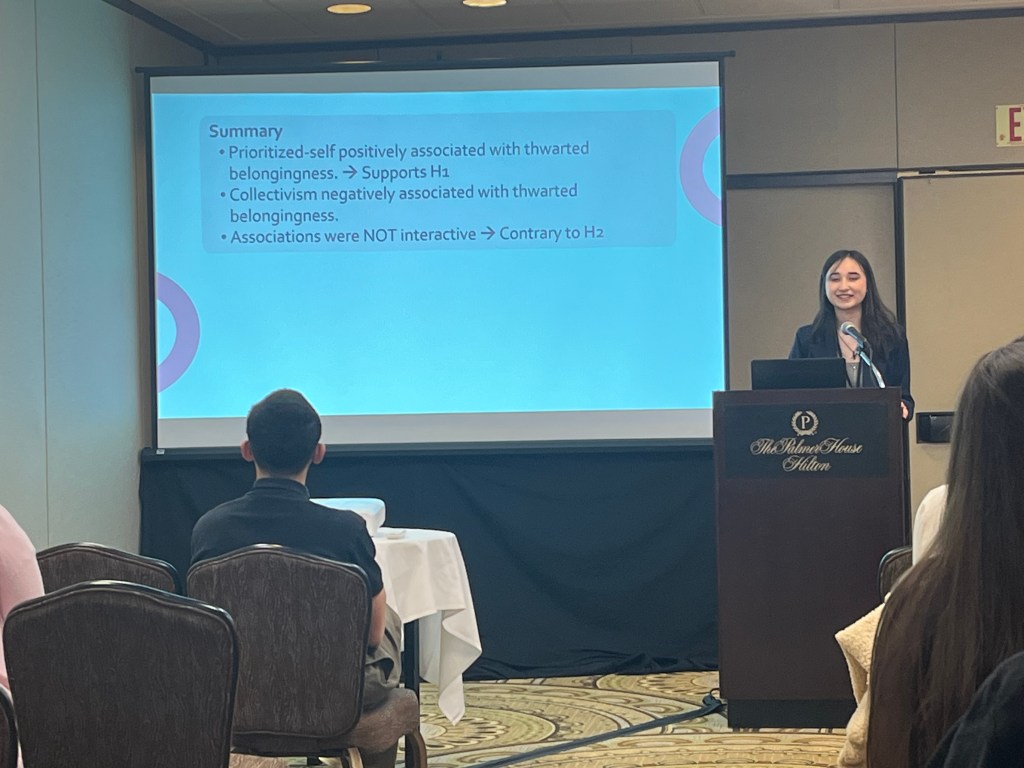
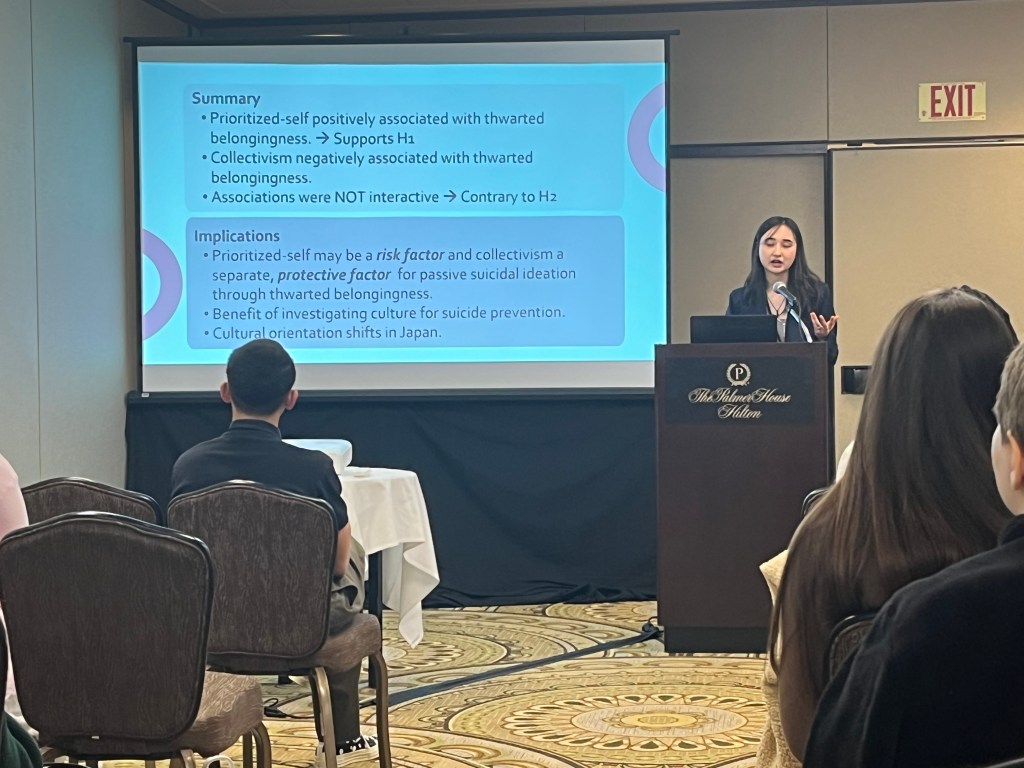
Marina Morris also gave a verbal presentation titled “Left Out: Privileged Self and Belonging in Collectivistic Cultures.” In her 15-minute presentation, Marina explored how a sense of privileged self and collectivism influence feelings of thwarted belongingness. The findings revealed that while both factors were associated with thwarted belongingness, they operated separately rather than interactively.
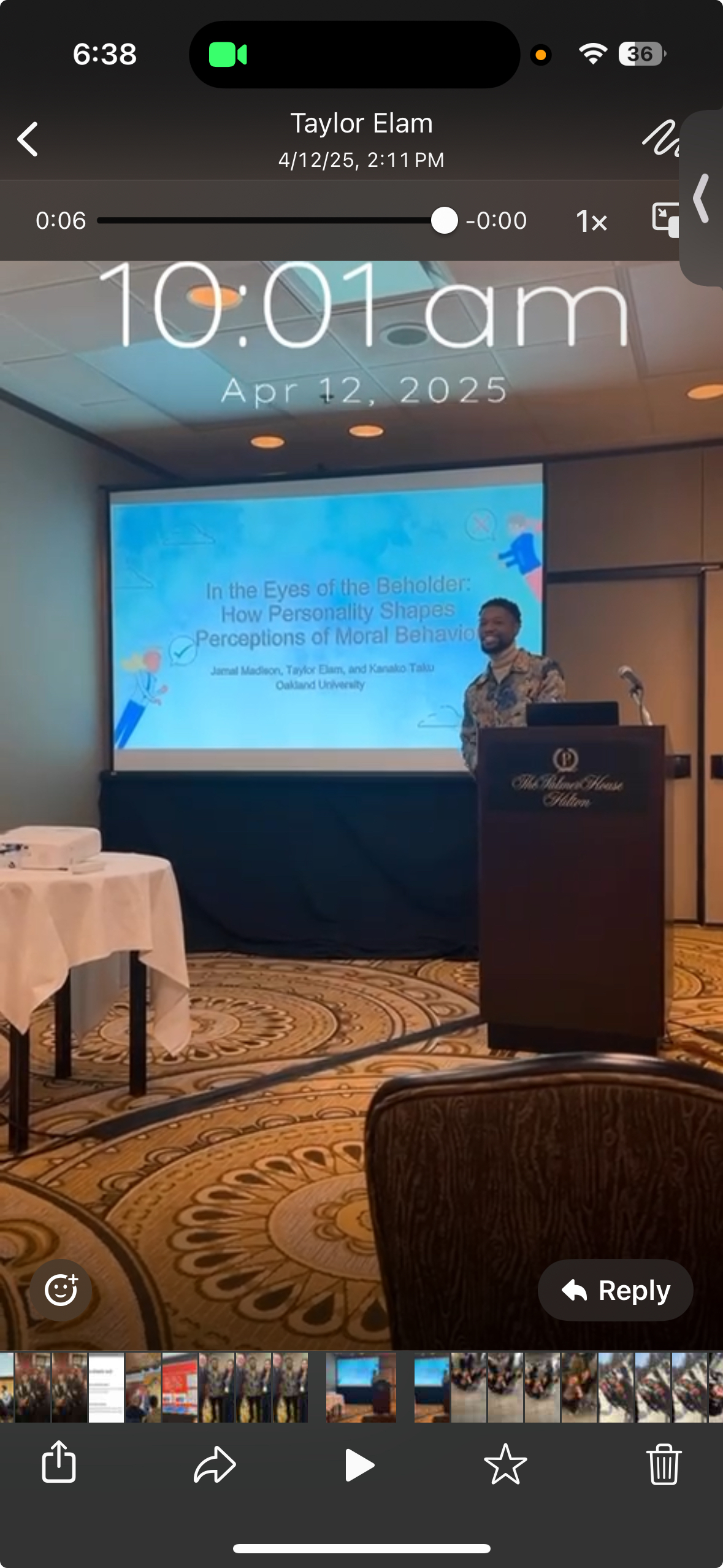
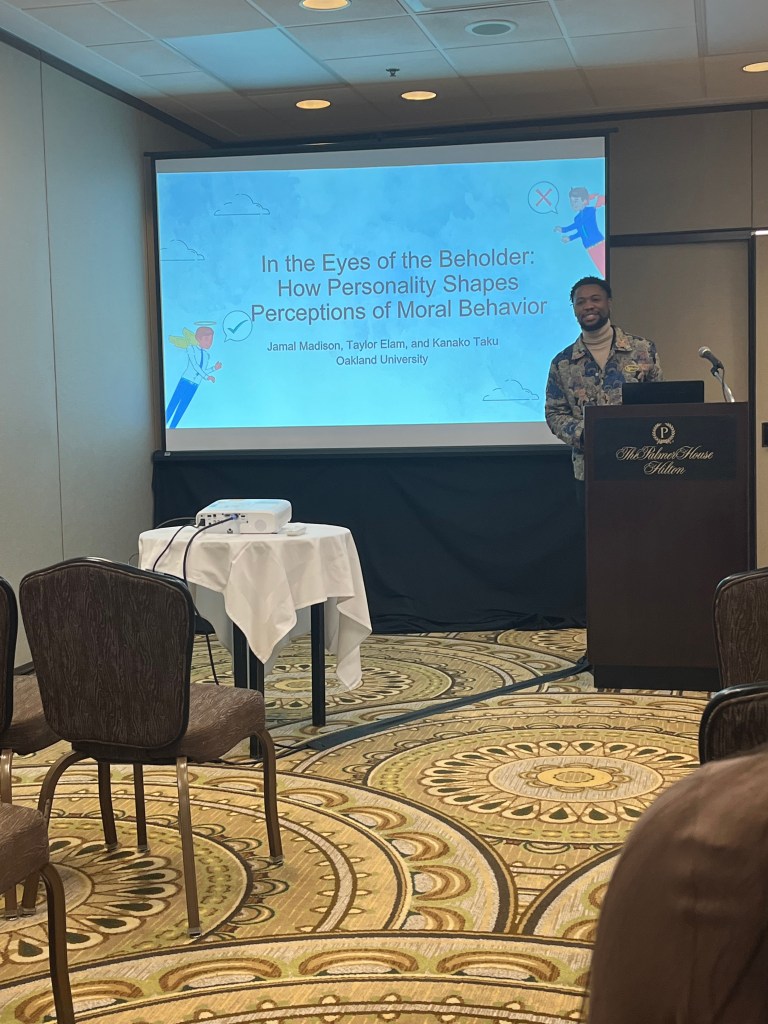
Jamal Madison presented a paper titled “In the Eyes of the Beholder: How Personality Influences Moral Perceptions.” His 15-minute presentation outlined how personality traits can impact moral judgments. He discussed how honesty, humility, emotionality, and conscientiousness were linked to stricter moral judgments. In contrast, agreeableness led to more forgiving impressions of others. His findings highlight the significant role that personality plays in shaping our reactions to the moral behaviors of others.
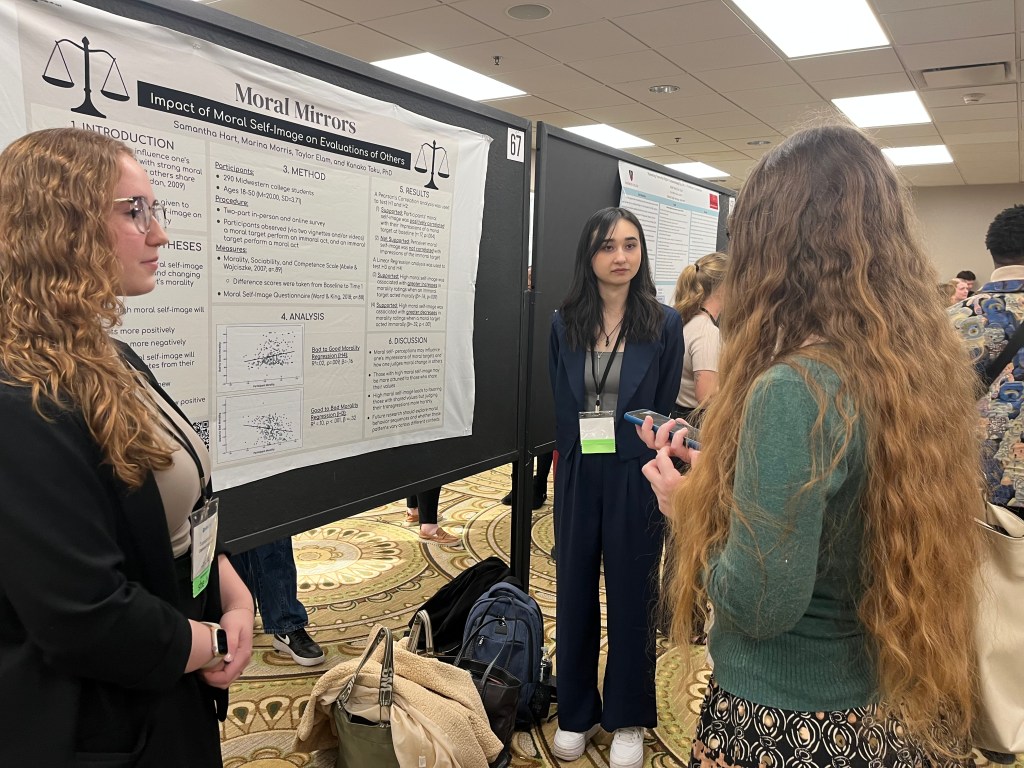
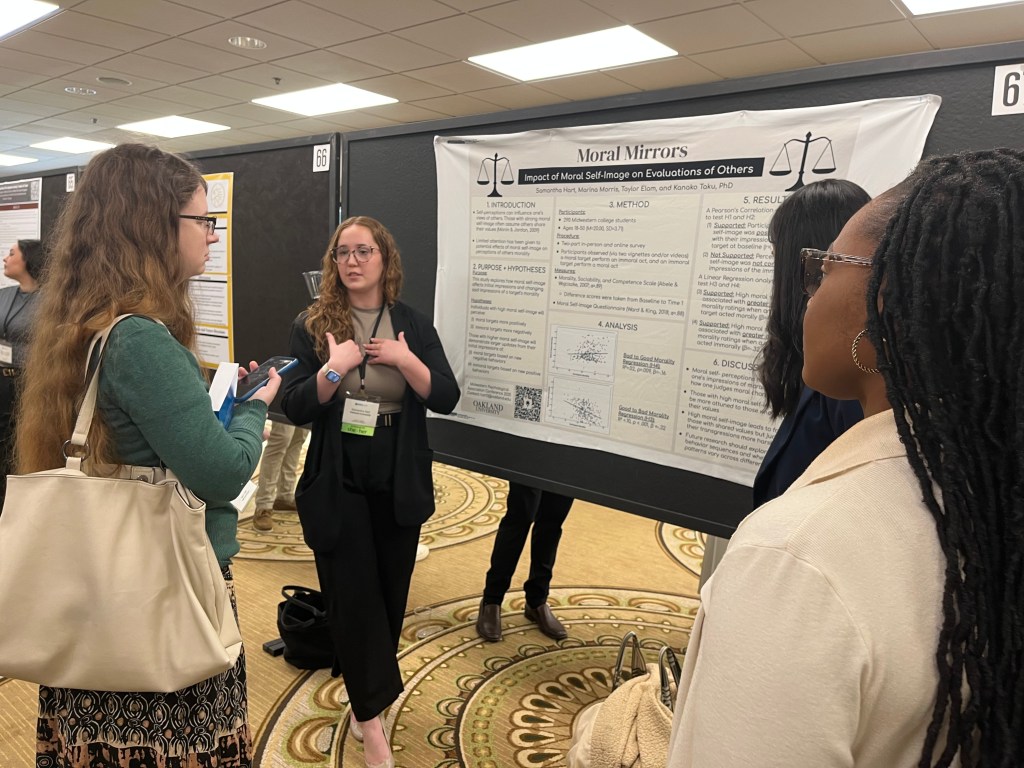
And finally, Samantha Hart, with co-authors Taylor Elam and Marina Morris, presented a poster titled “Moral Mirrors: Impact of Moral Self-Image on Moral Perceptions”. Her study found that individuals with a high moral self-image tend to view moral targets more positively and immoral ones more negatively. Those with a high moral self-image also judge transgressions more harshly, particularly when they involve people who share their values.

We had such a great time exploring all that MPA has to offer, and we even went to a magic show! We look forward to attending next year!




 FF-TIP LAB