
About a month ago, the FF-TIP Lab got the chance to present many of its latest findings at the 2026 APA Conference held in Washington, D.C.! During this three-day event known to be the largest gathering of mental health professionals in the world, researchers and practitioners alike shared their projects and inspired one another to keep expanding psychological research.
The FF-TIP Lab was no exception to this purpose and all of our members were able to present their own posters or talks at APA! From explorations of AI perceptions and post-traumatic growth to self-talk in sports, therapy dropout and cultural differences in ostracism behavior; each member was able to explore their unique interest concluding in all the amazing presentations given. Here is a rundown of each poster and talk:
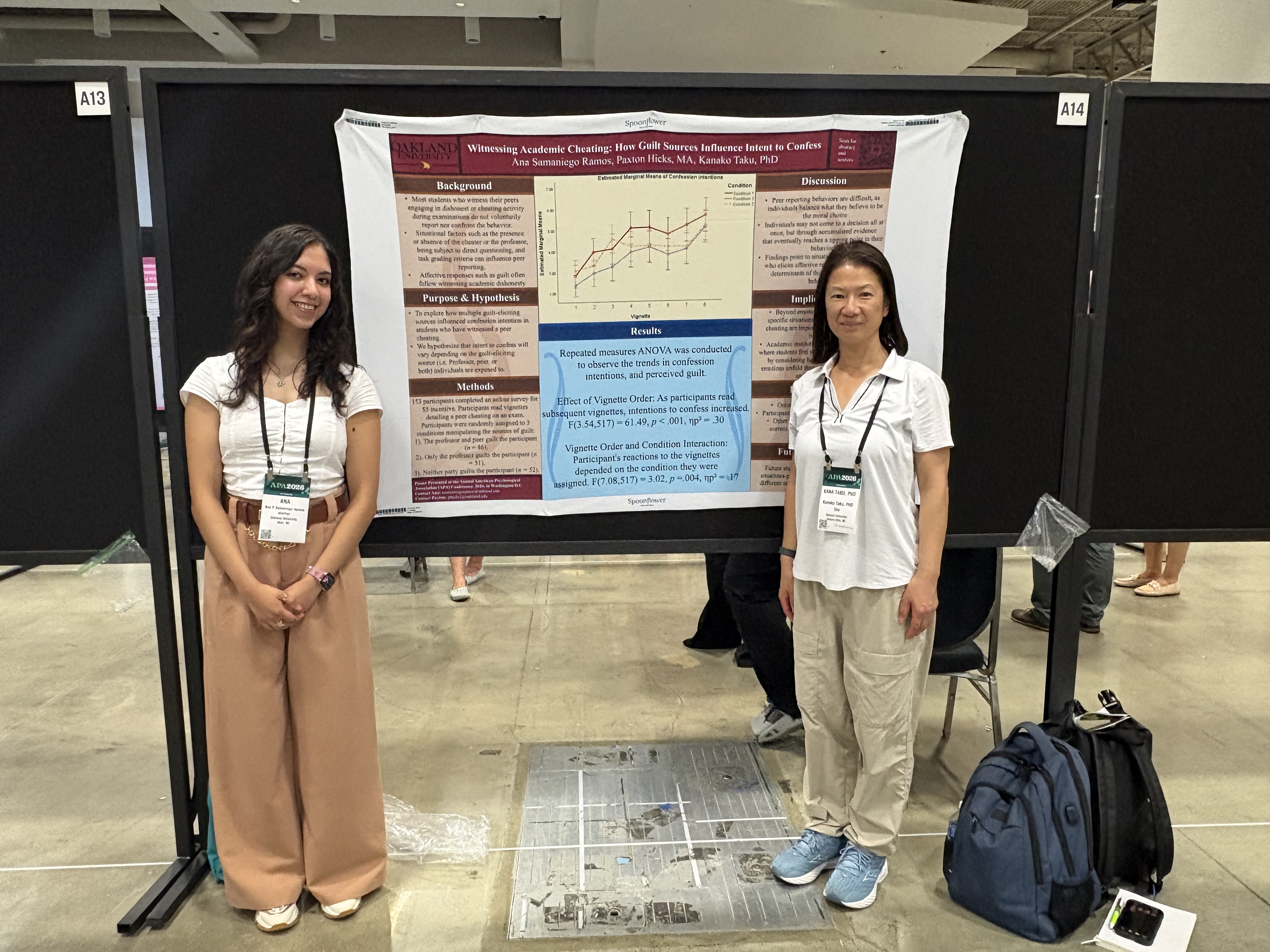
Ana Samaniego Ramos, with co-author Paxton Hicks, presented “Witnessing Academic Cheating: How Guilt Sources Influence Intent to Confess”. This research considered guilt as a main driver of moral behavior, including in academic settings. Ana and Paxton then explored how differing sources of guilt, a cheating peer and a worried professor, influenced participants’ intentions to speak up and report the academic dishonesty.
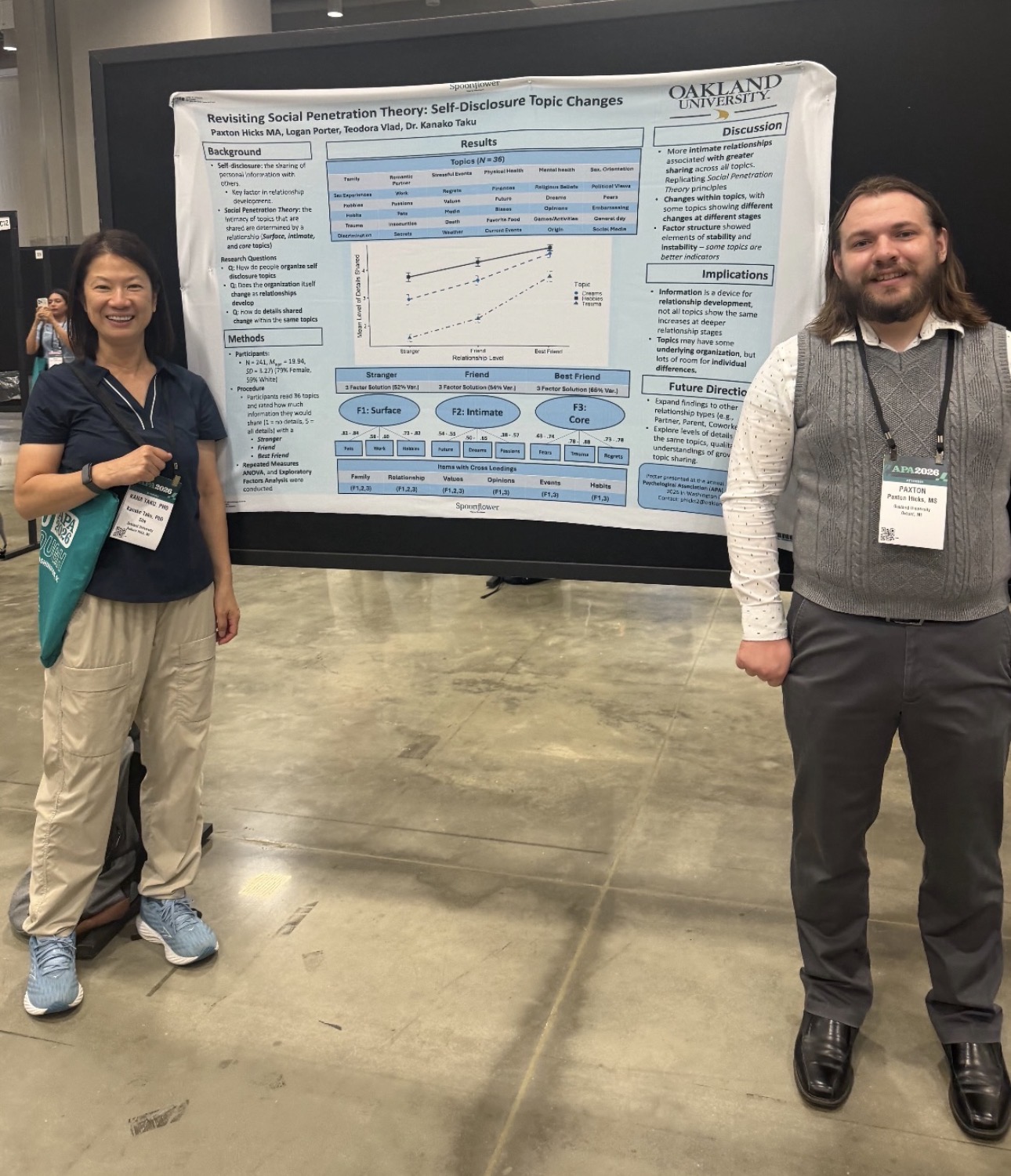
Paxton Hicks, with co-authors Logan Porter and Theodora Vlad, presented “Revisiting Social Penetration Theory: Self-Disclosure Topic Changes”. This poster explored how people share information across different levels of relationship closeness, and how different topics are organized across three levels of intimacy. They found that the more intimate a relationship is, the more information is shared across topics.
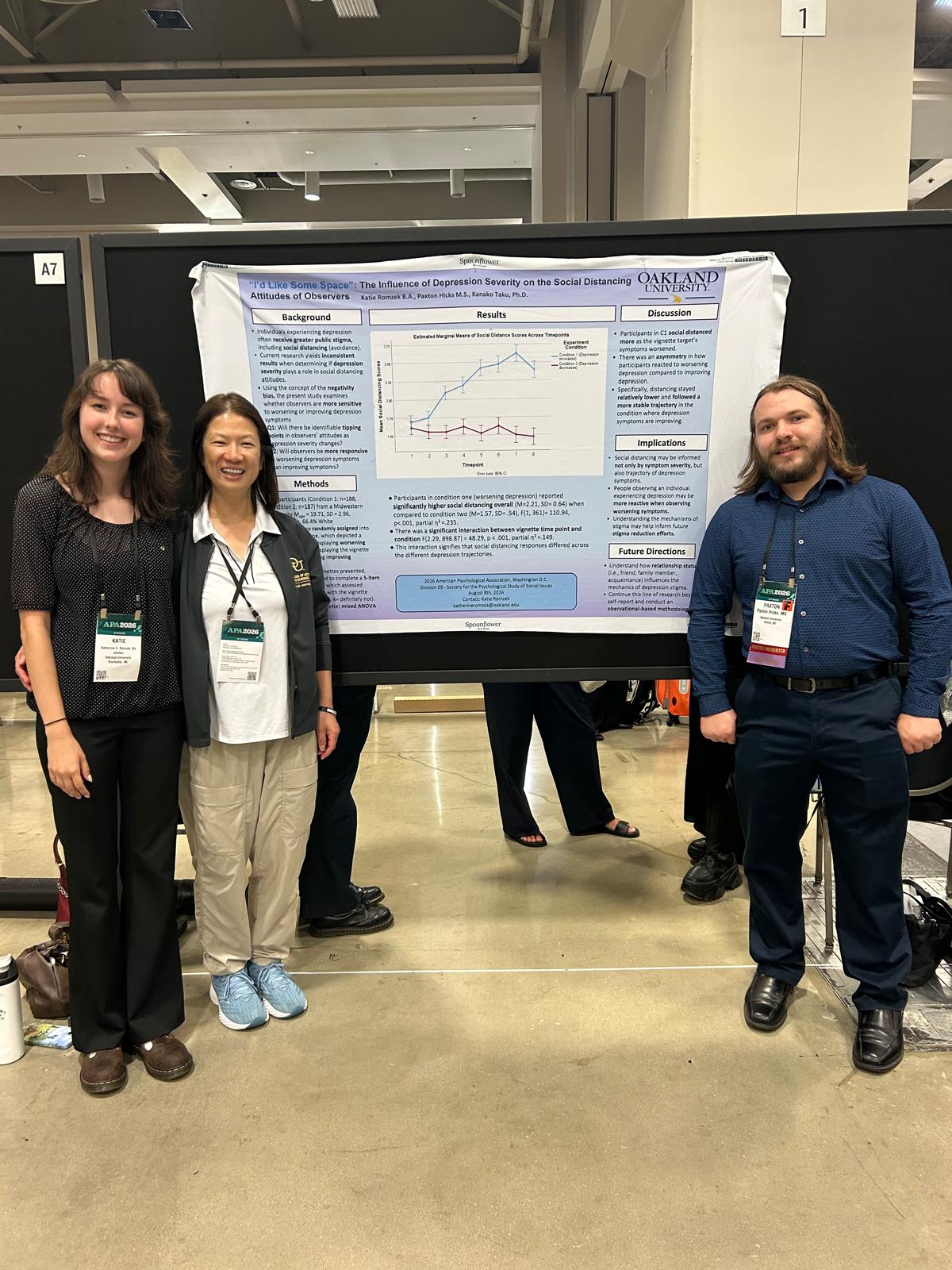
Katie Romzek, with co-author Paxton Hicks, shared her Honors College thesis’s findings with her poster titled ““I’d Like Some Space”: The Influence of Depression Severity on the Social Distancing”. In her research she aimed to understand individuals’ differing sensitivity to worsening and improving depression symptoms. She found that individuals tend to increasingly socially distance themselves when depression symptoms are worsening. In contrast, improving symptoms are associated with stable and relatively low social distancing.
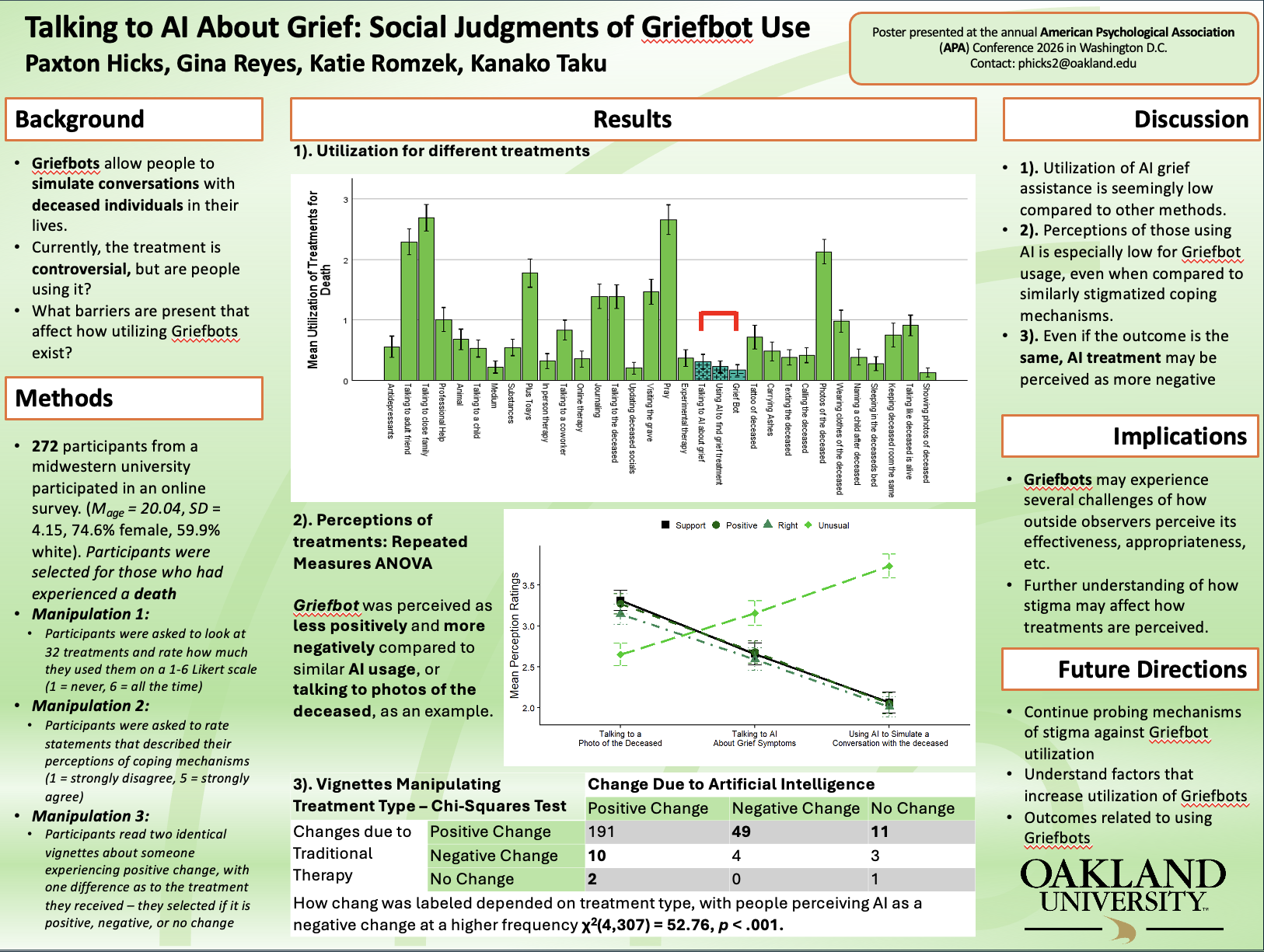
Paxton Hicks, with co-authors Gina Reyes and Katie Romzek, presented “Talking to AI About Grief: Social Judgments of Griefbot Use”. In this study, they took the recently developed concept of griefbots, which allow people to simulate conversations with deceased individuals, and investigated its usage and perceptions. They found that its usage its relatively low for now and that people tend to perceive griefbot treatment outcomes to be negative.
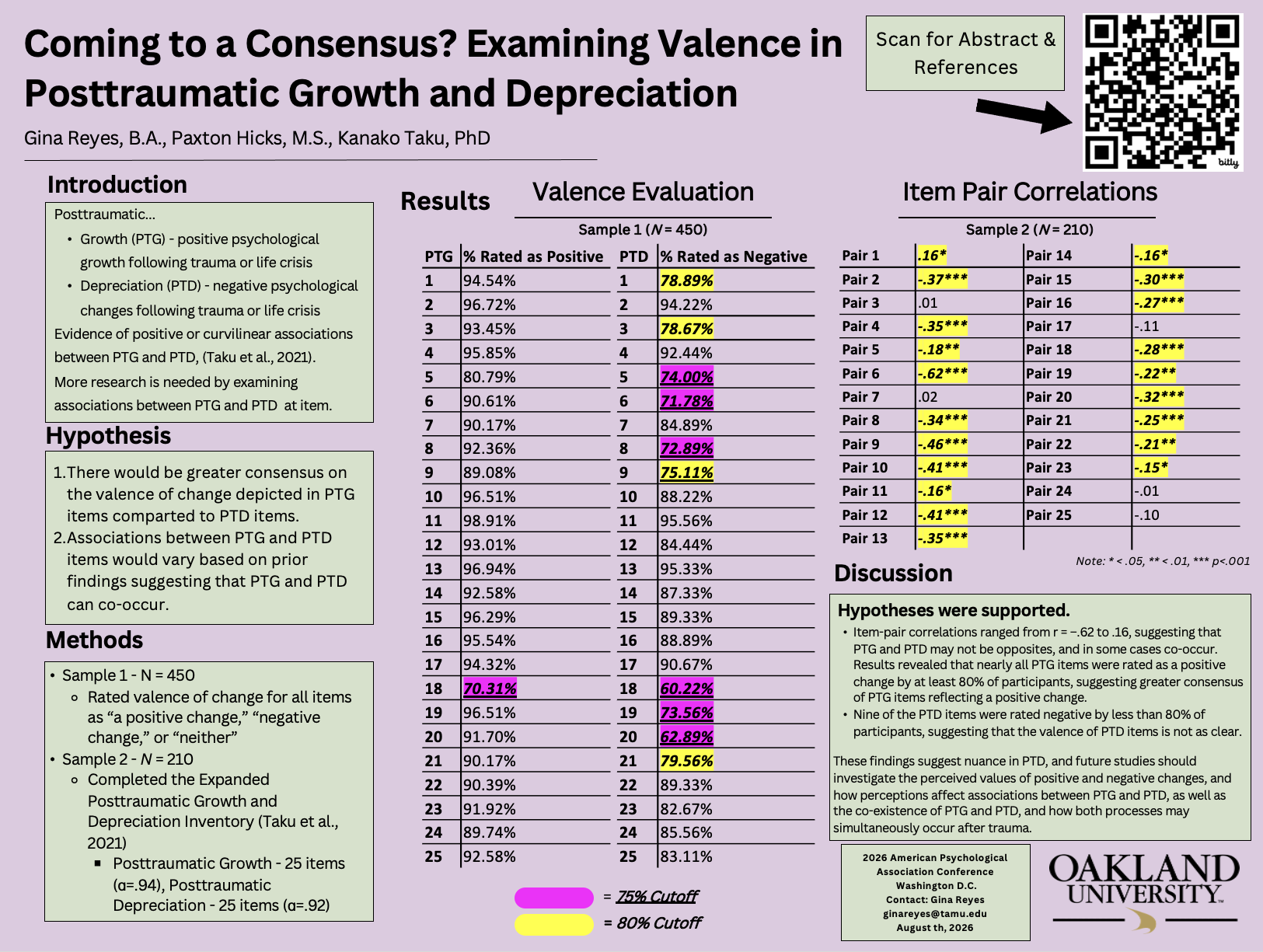
Gina Reyes (our former lab manager!), with co-author Paxton Hicks, presented “Coming to a Consensus? Examining Valence in Posttraumatic Growth and Depreciation”. They found that post-traumatic growth and post-traumatic depreciation are not opposite and both processes may occur simultaneously after trauma.
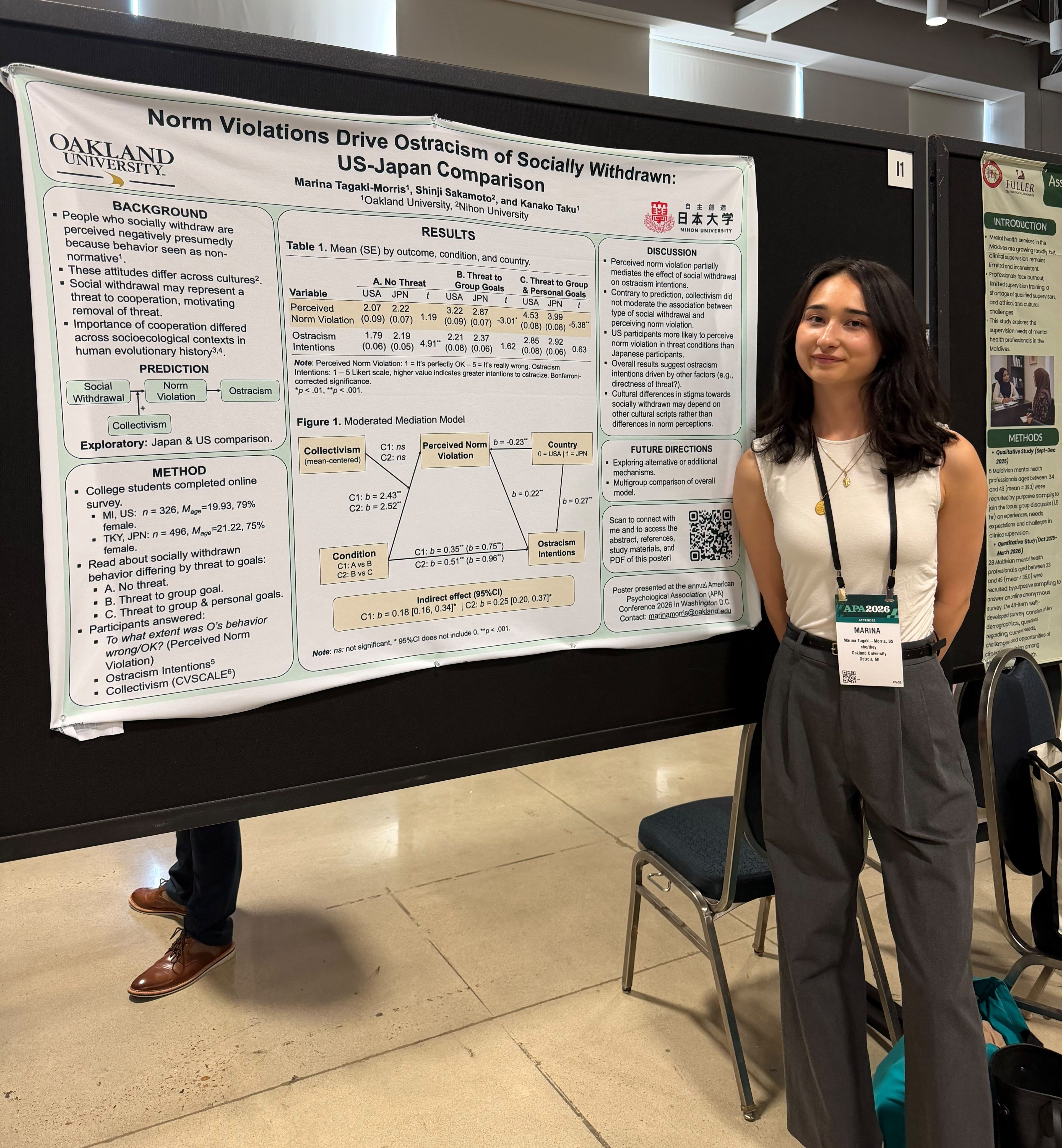
Marina Morris, with co-author Shinji Sakamoto, presented “Norm Violations Drive Ostracism of Socially Withdrawn: US-Japan Comparison”. She found that when an individual displays social withdrawal, ostracism behavior from the people around this individual occurs when the withdrawal is appraised as a social norm violation.
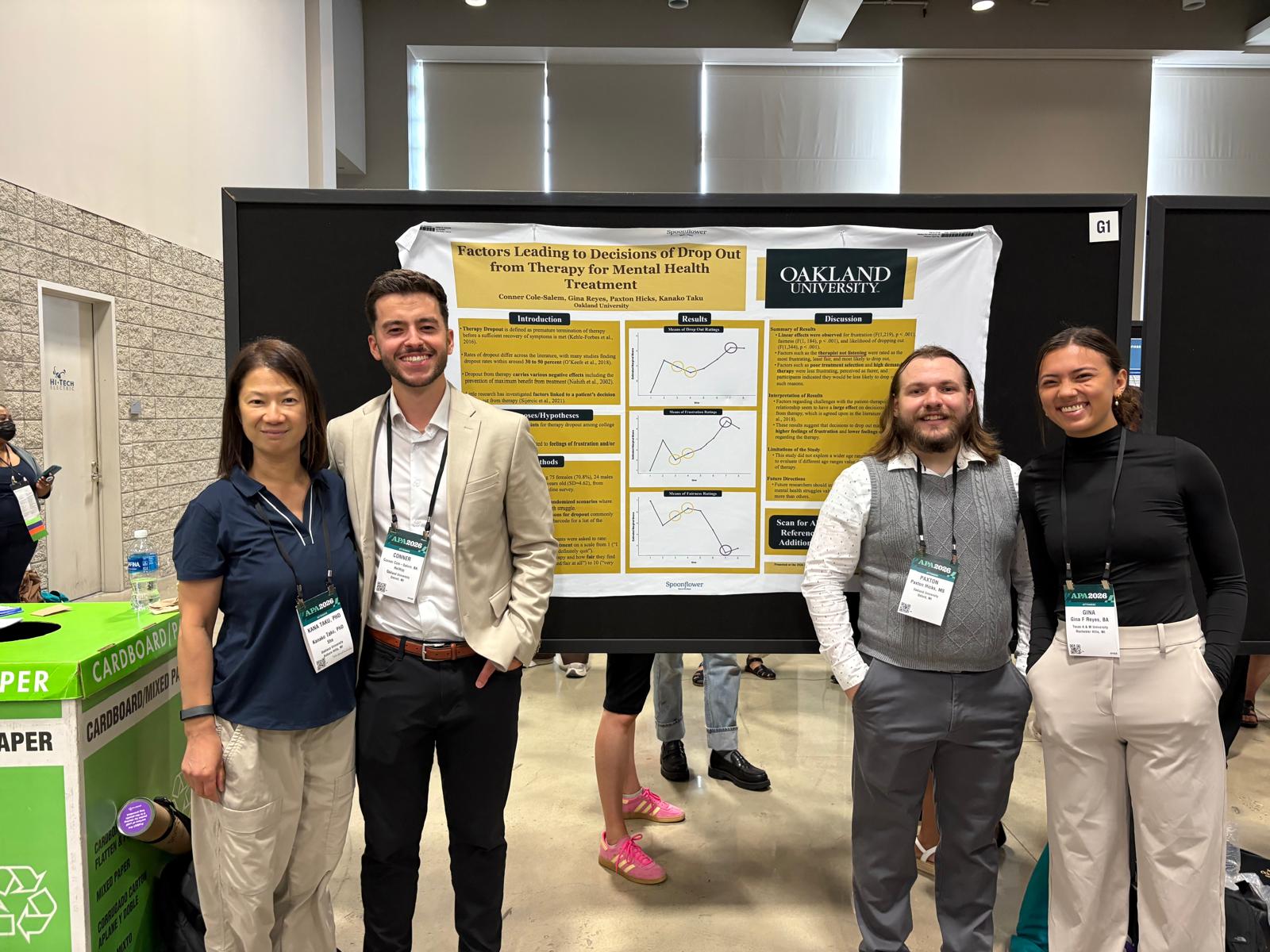
Conner Cole-Salem, with co-authors Gina Reyes and Paxton Hicks, presented “Factors Leading to Decisions of Drop Out from Therapy for Mental Health Treatment”. During his research, Conner found that therapists not listening to their patients is the most frustration-inducing factor and a significant reason for why patients drop out of therapy.
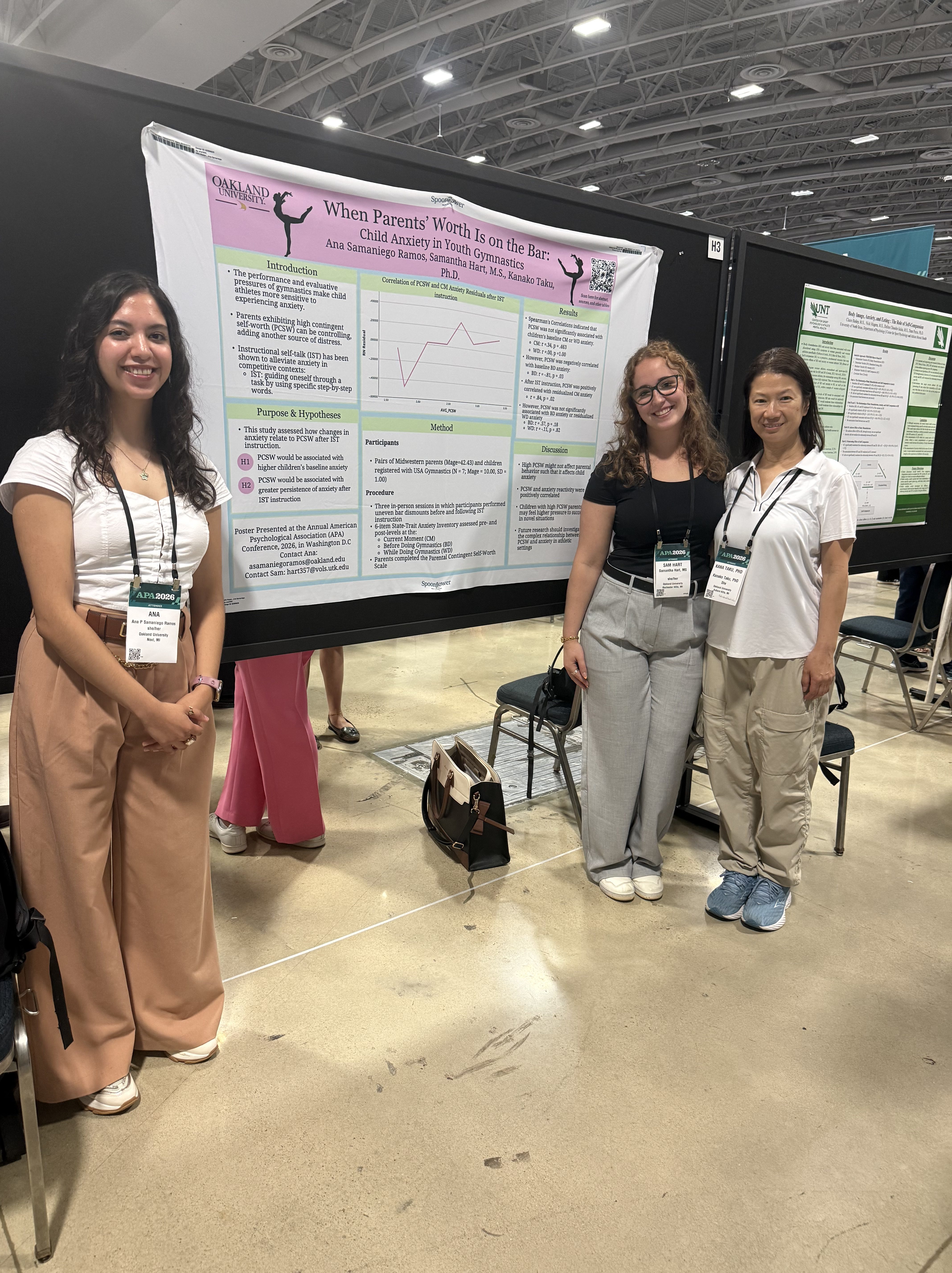
Ana Samaniego Ramos, with co-author Samatha Hart, presented “When Parents’ Worth Is on the Bar: Child Anxiety in Youth Gymnastics”. During her presentation, Ana shared that parents with high contingent self-worth might become an important source of distress for young gymnasts. She found that contingent self-worth may be associated with a higher level of anxiety in child athletes when they are facing new challenges and situations.
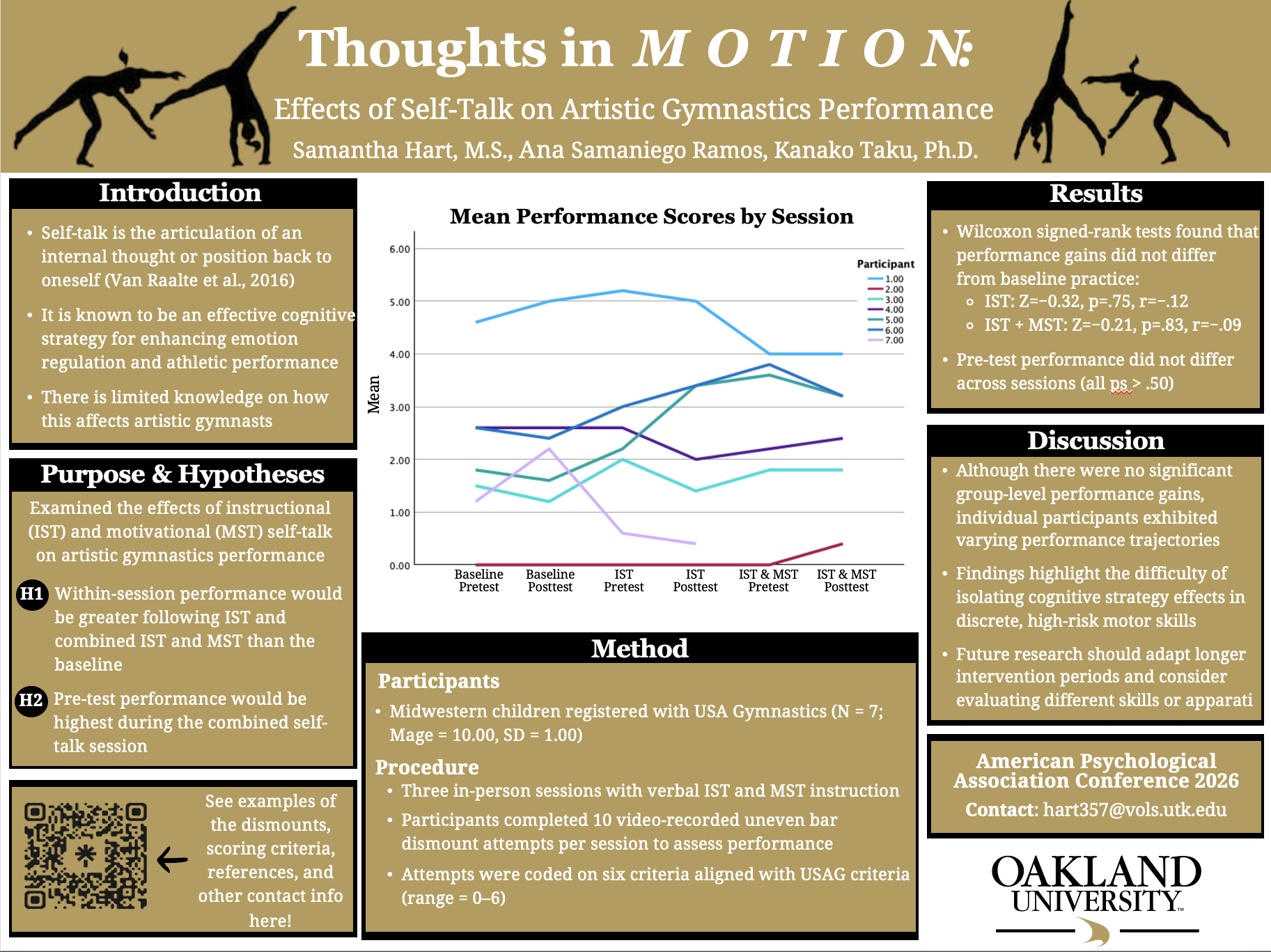
Samantha Hart, with co-author Ana Samaniego, presented “Thoughts in Motion: Effects of Self-Talk on Artistic Gymnastics Performance”. Sam found that techniques aimed at improving performance, such as self-talk, have varying effects on how athletes’ capabilities evolve over time. Therefore, further research needs to explore how self-talk operates across a greater period of time and with different skills.
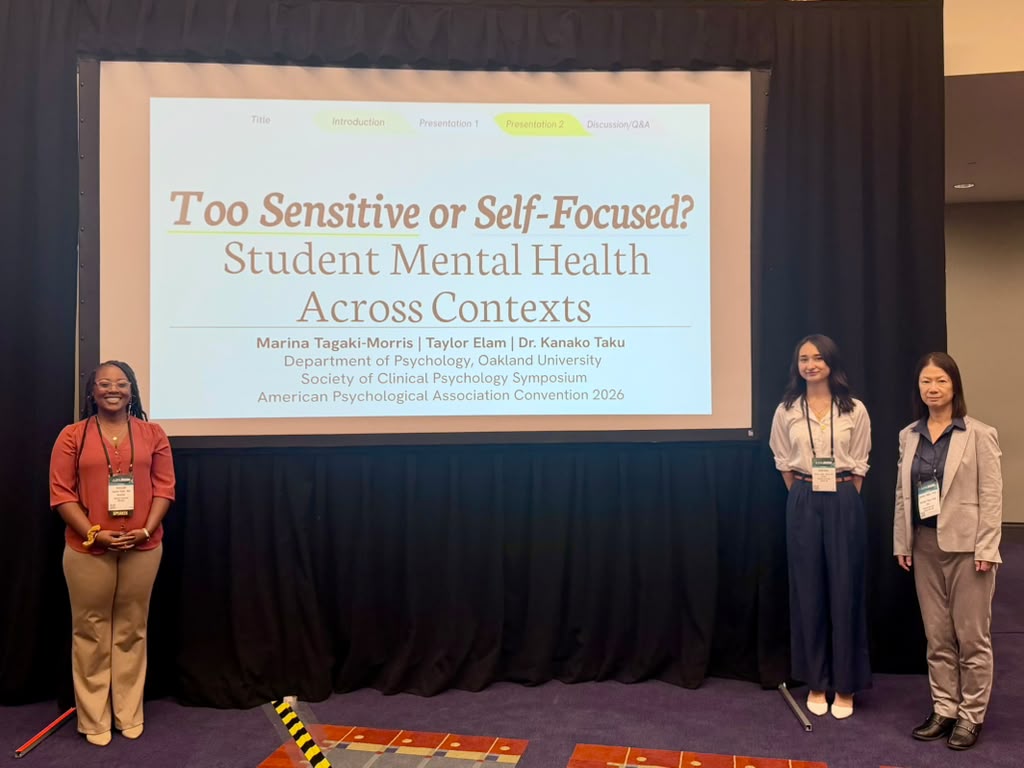
Finally, we had Taylor Elam, Marina Morris, and Dr. Kanako Taku gave a presentation titled “Too Sensitive or Too Self-Focused? Student Mental Health Across Contexts”. By comparing Japanese and U.S. participants, they explored interpersonal sensitivity and privileged-self and their link to interpersonal stressors and resilience.
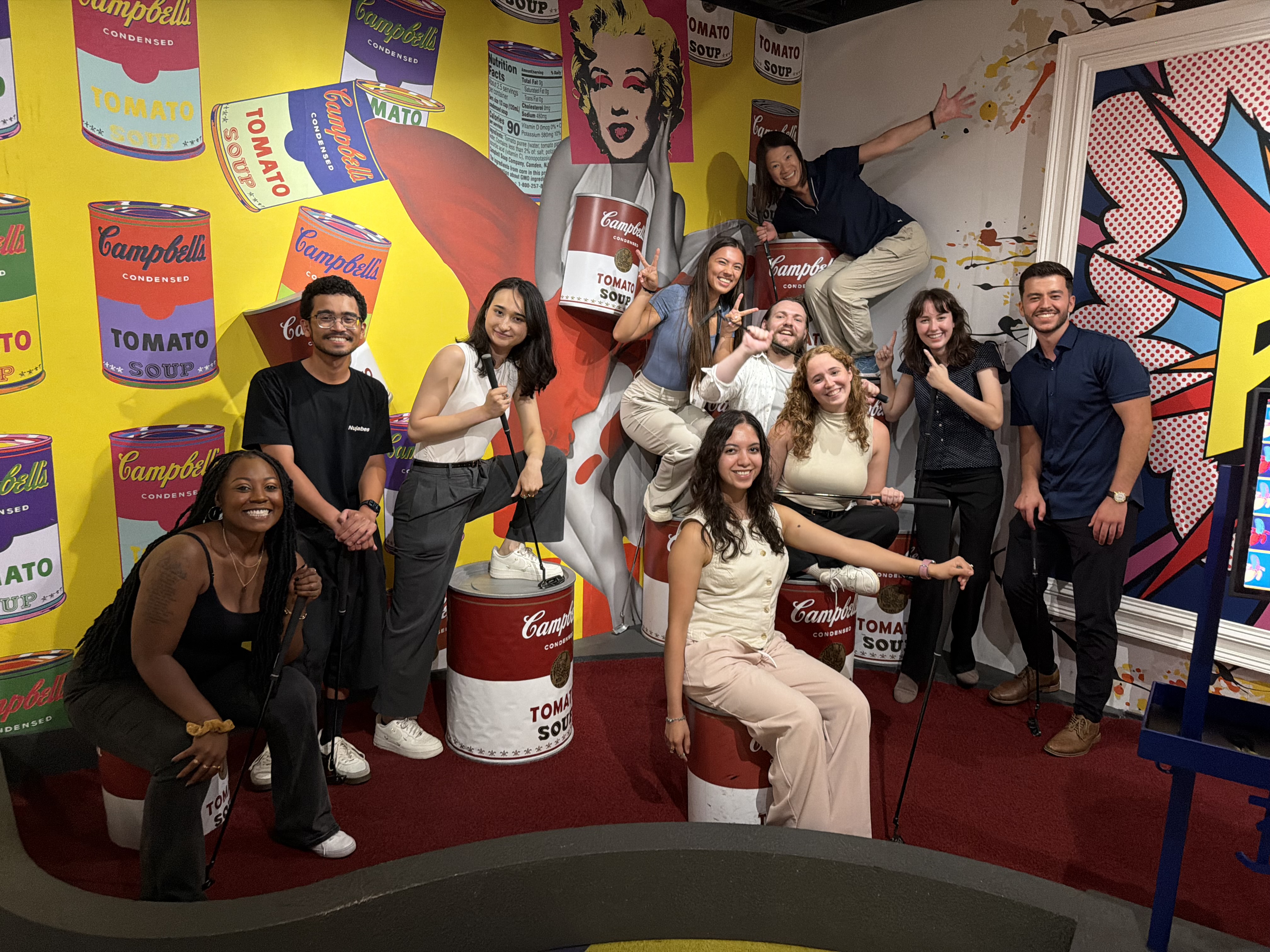
However, not only did the lab showed their amazing research findings, they also got to show out their skills in Putt Putt mini golf! We truly are a lab of many talents.
We had so much fun in this conference and can’t wait to see where the next one takes us!
 FF-TIP LAB